


Pamukkale, Hierapolis and St Philip: A Practical Visitor’s Guide

Pamukkale is one of those places that looks almost unreal in photos, yet feels completely natural once you arrive. Its bright white terraces were formed by mineral-rich thermal waters, and above them sits the extensive Greco-Roman city of Hierapolis, where you can walk among monumental streets, a vast necropolis and a remarkably preserved theatre. Add the hilltop St Philip site to your plan and you have a full, varied day that mixes landscapes, archaeology and a quieter viewpoint away from the busiest paths.
This guide covers what Pamukkale, Hierapolis and St Philip are, what you can realistically expect on site, and how to plan a comfortable visit with the right timing, footwear and route.
Understanding Pamukkale, Hierapolis and the St Philip site
Pamukkale means “Cotton Castle” in Turkish, a name inspired by the white travertine terraces that spill down the hillside. These terraces were created over a long period as warm thermal waters reached the surface, cooled, and deposited calcium minerals. The result is a layered slope of basins and ridges that can appear dazzlingly white in strong sunlight.
Hierapolis is the ancient city built beside these thermal waters. In antiquity, people travelled here for religion, healing and leisure, and the city developed into a major settlement with baths, temples, gates and a large cemetery area. Today it is a wide archaeological zone that you explore on foot, with long walking lines and plenty to see beyond the famous terraces.
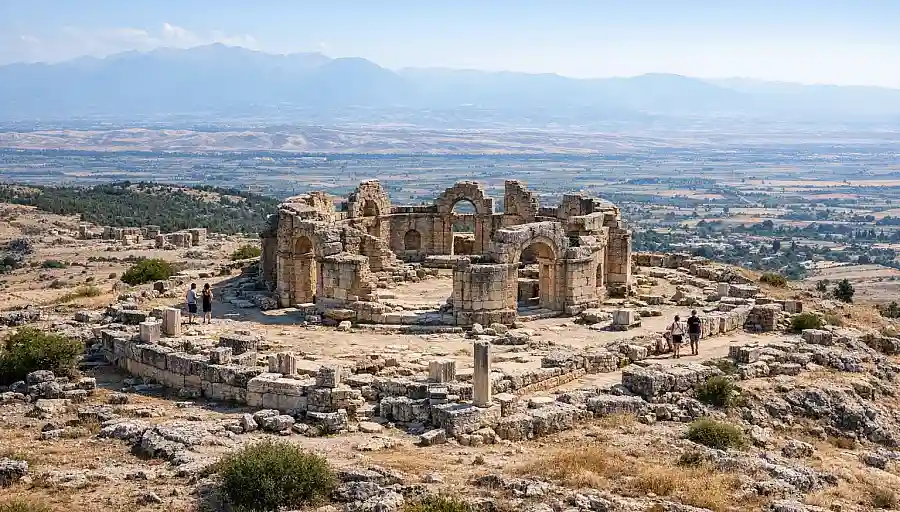
The St Philip site (often associated with the Martyrium of Saint Philip) sits on higher ground within the broader area. It is visited by travellers who are interested in early Christianity, but it is just as rewarding for anyone who wants a quieter walk, different views and a sense of how large the ancient landscape is beyond the headline attractions.
What you can expect when you visit
A visit here is not only about one photo spot. Think of it as three connected experiences:
- Pamukkale travertines: a bright, reflective landscape of mineral terraces, shallow pools and flowing water (water levels and accessible sections can vary).
- Hierapolis ruins: an open-air walk through ancient streets, monumental buildings and viewpoints, with uneven stone surfaces and a lot of open sun.
- St Philip area: a more uphill, less crowded walk to an atmospheric set of ruins and panoramic perspectives over the site.
Most visitors spend at least a half day, but if you want to explore Hierapolis properly and include St Philip at a relaxed pace, planning for most of the day usually feels more comfortable.
Pamukkale terraces: how the experience really feels
The terraces are best enjoyed slowly. The white surface reflects light strongly, and the shallow pools can be slippery underfoot. In some sections you walk through a thin flow of warm water; in others, you may see dry basins. This is normal, as water distribution and conservation rules can change over time, and conditions can differ by season.
A key point for first-time visitors is that you typically enter the travertine area without shoes. This helps protect the delicate mineral surface and keeps the terraces cleaner for everyone. Bring a small bag for your shoes and be ready for the sensation of warm water and textured stone underfoot.
Photography is wonderful here, but the terraces are more than a backdrop. Take time to look closely at the mineral formations, the changing blues of the water, and the way the landscape shifts as you climb or descend.
Water levels and colour: why photos vary
You may notice that some images show very full, bright turquoise pools, while on other days the basins look shallower or more matte. This can be due to weather, maintenance, conservation decisions, and seasonal differences in water flow. It is best to arrive with flexible expectations: the terraces remain striking in every season, but they do not look identical every day.
Hierapolis highlights: what not to miss
Hierapolis is big enough that it helps to have a loose plan rather than wandering without direction. The site includes major monuments spread out across a wide plateau, so comfortable walking shoes (for the ruins section) and a steady pace make a big difference.
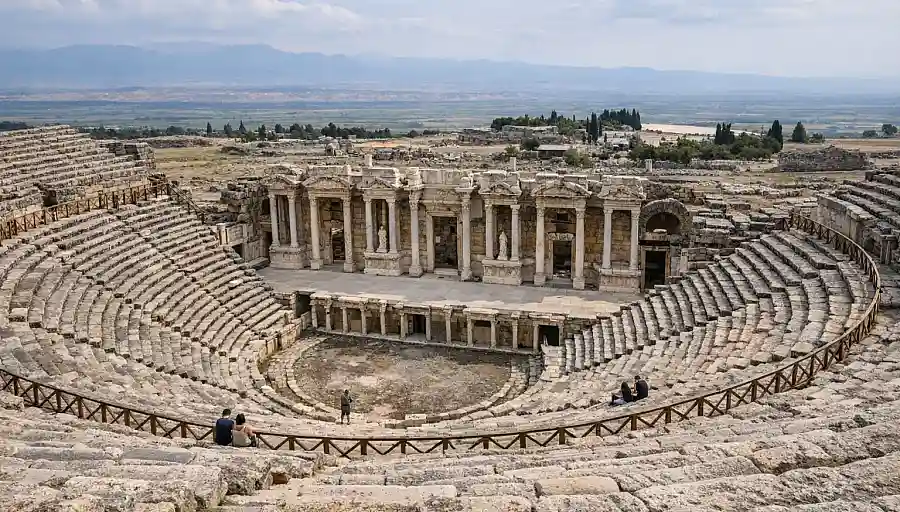
The ancient theatre
The theatre is one of the most visually impressive structures in Hierapolis and a highlight for many travellers. Set into the hillside, it offers a strong sense of the city’s scale. Allow time to take in the details and the views across the archaeological landscape.
The necropolis
Hierapolis has an extensive necropolis area with many tomb types. Even if you are not an archaeology enthusiast, the sheer size and variety are striking. The paths can be dusty and exposed, so this is a good section for a hat and water, especially in warmer months.
Ancient streets, gates and the broader city plan
Walking along the old routes helps you imagine the city as more than individual monuments. You will see sections of street, large building remains, and points that frame the landscape beyond. The stones can be uneven, so watch your footing, particularly if you are wearing sandals.
Thermal bathing: what to know
The area is famous for thermal water, and there is a well-known thermal pool experience within the archaeological zone that some visitors include. Access, water conditions and any maintenance closures can change, sometimes at short notice, so it is sensible to treat this as a possible extra rather than the core of your day. If you hope to swim, bring swimwear and a towel, and be prepared that availability may depend on operational decisions and conservation needs.
St Philip: what it is and why it is worth the walk
The St Philip site is usually quieter than the main terrace paths and the central monuments of Hierapolis. It sits on higher ground and feels more spacious, with a different atmosphere from the busier parts of the archaeological zone.
Travellers visit for different reasons. Some are interested in early Christian history and pilgrimage traditions connected with the area; others simply enjoy the walk, the changing angles over the ruins, and the chance to slow down away from the densest crowds.
Because it involves more walking and some uphill effort, it is a good option if you have the energy and want to round out your visit beyond the standard viewpoints.
Who this trip suits (and who should plan carefully)
Pamukkale and Hierapolis suit a wide range of visitors, but the walking conditions are an important consideration.
- First-time visitors to Türkiye: a classic landscape-and-history combination that is easy to appreciate without specialist knowledge.
- Families: children often love the sensation of walking in warm water on the terraces, but close supervision is essential because surfaces can be slippery and reflective sun can be intense.
- Couples and photographers: especially rewarding in softer light, with plenty of varied backdrops beyond the terraces.
- History and archaeology fans: Hierapolis is substantial and can take longer than many people expect.
If you have limited mobility, plan carefully. The travertine paths can be slippery, and the ruins involve uneven stones, steps and longer distances. Some parts may be manageable with a slower pace and strategic rest stops, but a full, comprehensive route can be challenging. If accessibility is a concern, consider focusing on a smaller selection of highlights rather than trying to cover everything.
How to plan your route through the site
Because the terraces and the city are connected, the order you visit can affect comfort and crowd levels. Many travellers find it easiest to combine them as one continuous experience rather than treating them as separate stops.
A practical approach is to time the travertines for a period when the light suits you and the heat is manageable, then explore the ruins with steady breaks. If you want to include St Philip, consider doing it once you are already warmed up and have a feel for your pace.
If you are visiting in a group or with family, agree a simple meeting point strategy. The open layout can make it easy to spread out unintentionally, especially when some people linger for photos and others walk ahead.
How long to allow
Rushing this area usually means you only see the terraces and a small portion of Hierapolis. To take in the key ruins and enjoy the terraces without feeling hurried, most visitors prefer to allow several hours. For a fuller visit including St Philip and time for rests and photos, plan for most of the day if your wider itinerary allows.
What to bring for a comfortable day
A little preparation makes a noticeable difference here, particularly because the site is exposed and walking-heavy.
- Comfortable walking shoes for Hierapolis and the St Philip walk (you will remove footwear on the travertines, but you still need good shoes for the ruins).
- A small bag to carry your shoes while on the terraces.
- Sun protection such as a hat, sunglasses and sun cream, especially from late spring to early autumn.
- Water to stay hydrated throughout the walk.
- Swimwear and a towel if you hope to include a thermal bathing experience (availability can vary).
- Light layers in cooler months; the white terraces can feel cold in wind or shade even when the day is bright.
If you are visiting with children, consider bringing a spare pair of socks for after the terraces, and a small snack for breaks, particularly if you are travelling at an unhurried pace.
Seasonal and weather considerations
Pamukkale can be visited year-round, but the experience changes with the season.
Summer typically brings stronger sun and higher temperatures, which can make the open ruins feel more demanding. Starting earlier in the day or aiming for later afternoon light often feels more comfortable, but the best time for you will depend on your travel style, transport plans and local conditions.
Spring and autumn are often favoured for walking, with more moderate temperatures and pleasant light for photography. These seasons can still be busy, especially around holiday periods, so flexibility helps.
Winter can be quieter and atmospheric, with crisp light and fewer crowds. Conditions can be colder and wetter, and the travertines may feel particularly slippery. On rare days, you may even encounter snow, which changes the look and feel of the landscape entirely.
Whatever the season, remember that weather can shift quickly. A breezy day can feel cooler on the terraces, and a cloudy day can reduce glare and make walking more comfortable.
Getting there and getting around (in general terms)
Pamukkale is visited either as a dedicated stopover or as a day trip from nearby holiday regions. Travellers typically reach the area via Denizli and then continue by road to the entrance areas. Options commonly include organised day tours, private transfers or self-drive itineraries, depending on where you are staying and how much flexibility you want.
If you prefer a straightforward day with a clear route and context for what you are seeing, a guided trip can be a comfortable option. A good guide can help you pace the visit, understand what you are looking at in the ruins, and decide how to balance the terraces, the main monuments and St Philip without feeling rushed.
TurPolia can help arrange visits to Pamukkale and Hierapolis with transport and guidance tailored to your base location and the season, which is particularly useful if you want to combine the headline sights with the quieter corners of the site.
Practical etiquette and on-site comfort tips
Pamukkale is both a natural formation and a protected visitor area. A few simple habits help keep the site pleasant for everyone while protecting the terraces and improving your own comfort.
- Follow the designated walking routes and respect any roped-off sections, as access can change for conservation.
- Move carefully on wet stone, especially when stepping into and out of shallow pools.
- Take breaks in the ruins when you find shade or a calmer corner, particularly in warm weather.
- Keep expectations realistic about crowd levels at peak times; the site is famous and can be busy.
If you are sensitive to bright light, sunglasses make a noticeable difference on the terraces. The combination of white mineral surfaces and strong daylight can be surprisingly intense.
A simple way to make the visit more rewarding
Many travellers remember Pamukkale for the terraces, but often leave talking about the scale of Hierapolis and the feeling of walking through a full ancient city in an open landscape. If you have the time and energy, treat the terraces as the beginning rather than the whole story. Including the theatre, a stretch of the ancient streets, and the quieter St Philip area gives you a more rounded sense of why this place mattered for centuries.
With sensible footwear, sun protection and a relaxed pace, Pamukkale, Hierapolis and St Philip can be one of the most visually distinctive and varied days of a Türkiye itinerary.
Frequently Asked Questions
What is the best time of day to visit Pamukkale for photos?
Softer light in the earlier morning or later afternoon can be more flattering and more comfortable for walking. Midday sun can be very bright on the white terraces, and crowd levels can also feel higher depending on the season.
Can you swim at Pamukkale or inside the Hierapolis area?
There is a well-known thermal pool experience within the Hierapolis zone that some visitors include, but access and conditions can change due to maintenance or conservation decisions. If swimming matters to you, bring swimwear and check locally on the day.
How long should I allow for Pamukkale, Hierapolis and St Philip?
To enjoy the terraces and see the main parts of Hierapolis, allow several hours. If you want a more complete walk that also includes the St Philip site and time for breaks and photos, planning for most of the day is usually more comfortable.
Is Pamukkale suitable for families with children?
Yes, many families enjoy the visit, especially the terraces. The main considerations are sun exposure, long walking distances and slippery surfaces on the wet travertines, so close supervision and good preparation are important.
What should I wear on the Pamukkale terraces?
You will usually walk barefoot on the terraces, so choose clothing that is easy to move in and bring a small bag to carry your shoes. Sun protection is useful in bright weather, and in cooler months light layers can help.
Do I need a guide for Hierapolis and the St Philip site?
A guide is not essential, but it can add context and help with pacing and route planning, especially if you want to include less-visited areas such as the St Philip site. Many travellers find a guided visit helpful when time is limited.
Tales Beyond Borders


