


Perge Ancient City near Antalya: History, Ruins & Visit Tips
 AI-generated illustrative image.
Perge Ancient City is one of the most rewarding Roman-era archaeological sites to visit near Antalya, especially if you want a place where you can walk through a real ancient street plan rather than just viewing a few isolated ruins. Set on the Pamphylian plain, Perge combines broad colonnaded avenues, monumental gates, a theatre, a stadium and substantial bath complexes in a single, open-air site. It’s an easy cultural half-day from Antalya, and it also works well as a stop from Belek or Side if you’re looking to add history to a beach holiday.
Perge in context: Pamphylia, Greek influence and Roman power
In antiquity, Perge was a major city of Pamphylia, the fertile region along Türkiye’s southern Mediterranean coast. Its location connected it to inland routes as well as the wider coastal world, and the city grew through successive periods of influence and rule. As with much of this coastline, Perge reflects layers of Greek cultural influence followed by a long and highly visible Roman period, when many of the monumental buildings and the carefully planned street layout took their most recognisable form.
For visitors today, you don’t need to be an expert in ancient history to enjoy Perge. The site is readable: you can identify where people entered the city, where they shopped and socialised, where they watched performances and sporting events, and how water and public bathing shaped daily life. That clarity is a big part of Perge’s appeal.
What you can see at Perge today (and what not to miss)
Perge is best enjoyed slowly, with time to step off the main track and look at details—stone paving worn by footsteps, the rhythm of column bases along the avenue, and the way major public buildings were positioned to impress. The highlights below are the areas most visitors prioritise.
The city gates: a grand entrance with layers
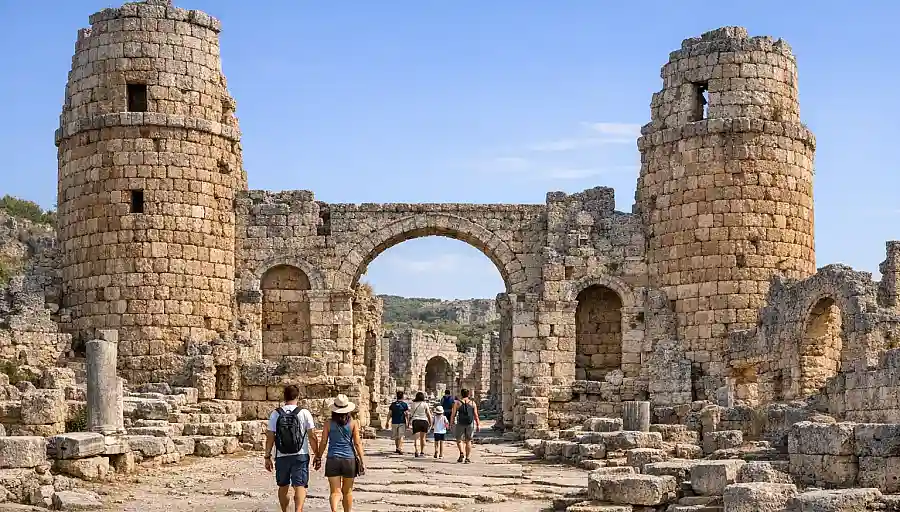
One of the strongest first impressions at Perge comes from its city gates. The approach helps you understand that this was not a small settlement but a self-confident urban centre. You’ll see how later monumental gateways sit alongside (and sometimes over) earlier defences, showing how the city’s needs and image changed over time.
Take a moment here before moving on: it’s a good place to orient yourself, imagine processions and arrivals, and notice how the architecture frames the route into the heart of the city.
The colonnaded street: Perge’s most memorable walk
Perge’s colonnaded street is the feature many travellers remember most clearly. Wide and straight, it gives you a strong sense of planned Roman urban design. Even with many columns missing, the repeated bases and the scale of the avenue make it easy to picture a lively thoroughfare lined with public buildings and everyday activity.
As you walk, look out for the way the street is engineered—drainage, kerbs, and the relationship between the roadway and the spaces beside it. These small details are what turn “ruins” into a real place.
The Roman baths: a city built around water and public life
The Roman baths at Perge are not a minor add-on; they are a reminder that bathing was a social institution as much as a practical necessity. The surviving walls and room divisions help you understand the scale of public investment and the daily rhythms of the city. Even if you don’t know the technical names of the rooms, you can still appreciate the sequence of spaces and the way the complex was designed for movement, meeting and relaxation.
If you enjoy architecture, this is a good area to slow down and notice construction techniques, thick walls and the sense of enclosed volume that remains even without roofs.
The agora: the civic and commercial heart
Like many major cities in the ancient Mediterranean, Perge had an agora—a central space tied to trade, administration and public life. Standing in or near the agora area helps you understand the city as a working community rather than a collection of monuments. It’s also a useful mental anchor: from here, the theatre, baths and main streets feel like parts of a coherent plan.
The theatre: drama, music and public display
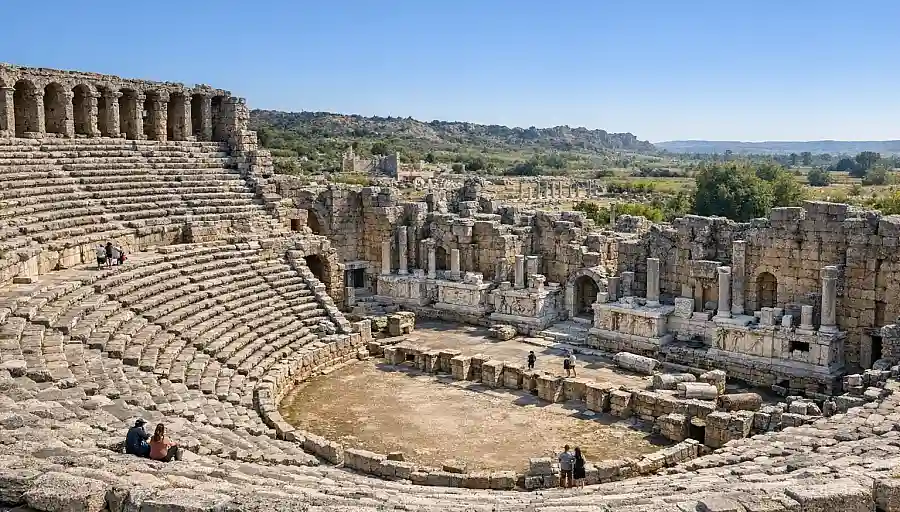
Perge’s theatre is one of the site’s headline structures. Its scale makes it clear that public performance was central to civic identity. Even if access varies due to conservation work, you can usually view enough to understand the layout: seating tiers, the performance area, and the imposing architectural backdrop that once framed events.
For photography, the theatre is often best appreciated with side light (early or later in the day), which brings out the texture of the stone.
The stadium: built for crowds and competition
The stadium at Perge is another “wow” moment, partly because it survives in a form that is easy to read at a glance. It conveys the scale of ancient public entertainment and competitive events—one more sign that Perge was a city built for gatherings as well as governance.
Allow time to walk along its edge rather than just taking a quick photo. The perspective changes as you move, and the structure’s size becomes more apparent.
 AI-generated illustrative image.
Planning your visit: location, timing and how long to allow
Where is Perge Ancient City?
Perge Ancient City is near Antalya, inland from the modern coastline on the Pamphylian plain. It’s commonly visited as a straightforward day trip or half-day outing from Antalya city and the Lara/Kundu hotel areas. It’s also realistic to visit from nearby resort areas such as Belek and Side, either by private transport or as part of an organised excursion that focuses on regional archaeology.
How long do you need at Perge?
Most visitors find that around two to three hours works well for a comfortable visit that includes the main highlights (gates, colonnaded street, baths, agora, theatre and stadium) with time for photos and short pauses. If you prefer a slower pace, enjoy reading on-site information, or like to sketch and photograph details, you can easily extend your visit.
A shorter visit can still be worthwhile if you focus on the colonnaded street and the major entertainment buildings, but Perge rewards anyone who gives it breathing room.
Best time of day to visit
Perge is an open archaeological site with limited shade in places, so earlier in the day is often more comfortable, particularly in the hotter months. Later afternoon can also be pleasant and is sometimes better for softer light on the stonework. If you’re visiting in high season, arriving earlier can also help you enjoy the main areas with a calmer feel.
Best season for Perge
For many travellers, the most comfortable conditions are typically in the spring and autumn shoulder seasons, when temperatures are generally milder for walking. Summer visits are still perfectly possible—just plan sensibly around heat and sun exposure. In winter, weather can be changeable, but cooler temperatures can make exploring more comfortable on clear days.
Why Perge is worth visiting from Antalya, Belek and Side
If you’re based in Antalya, Perge is one of the most convenient ways to add depth to a holiday that might otherwise focus on beaches, restaurants and the old town. The site gives you a strong sense of the region’s ancient identity without requiring long travel times.
From Belek, Perge is a smart choice if you want a cultural break from golf and resort life. You can be back at your hotel with plenty of time left in the day, and the contrast between modern leisure and ancient urban life is striking.
From Side, visiting Perge works well for travellers who have already enjoyed Side’s seaside ruins and want to see a larger, more fully planned ancient city layout. Side and Perge complement each other: one is shaped by its coastal setting, the other by a broader inland plain and a more expansive civic plan.
What to bring (and what people often forget)
Perge is a walking site with uneven stone and open ground. A little preparation makes a big difference to comfort and enjoyment.
- Comfortable walking shoes with grip for uneven surfaces and ancient paving.
- Sun protection (hat, sunglasses, sunscreen), especially in warmer months.
- Water, particularly if you’re visiting in the heat.
- A light layer in cooler months, as breezes and shade can feel chilly.
- Curiosity and patience: Perge is at its best when you slow down and look closely.
A common mistake is assuming the visit will feel like a shaded museum stroll. It’s more like a light hike through history, so dress and plan accordingly.
 AI-generated illustrative image.
How to experience the ruins without rushing
A simple way to structure your visit is to start at the gates, follow the main colonnaded street, then branch out to the baths and agora before finishing with the theatre and stadium. This mirrors the way the city’s spaces connect: ceremonial entrance, civic core, and the larger venues built for crowds.
If you’re visiting with a guide, you’ll often get more out of features that can otherwise be easy to walk past—such as how water was managed, how public buildings signalled status, and why certain areas were positioned where they were. If you’re visiting independently, take your time reading any on-site panels and pause at viewpoints where the street lines up with the bigger structures.
Tours and transport: independent visit or guided day trip?
You can visit Perge independently with private transport or a taxi, or join a guided excursion that pairs it with other nearby ancient sites. The best choice depends on how you like to travel. Independent visits give you flexibility and quiet moments for photography. Guided visits can help you understand what you’re looking at, particularly in complex areas such as the baths and the civic centre.
As a licensed local company, TurPolia can help with practical arrangements such as private transfers or a guided day plan that includes Perge at a comfortable pace. It’s worth choosing an itinerary that gives you time on site rather than trying to squeeze too many places into one day.
A final thought: what makes Perge feel special
Many archaeological sites have individual standout monuments. Perge’s strength is the way its ruins still feel like a city: gates that set the tone, streets that lead somewhere, and public buildings that explain how people gathered, relaxed and celebrated. If you’re staying around Antalya and want one ancient site that delivers both atmosphere and substance, Perge Ancient City is an excellent place to start.
Frequently Asked Questions
Is Perge Ancient City suitable for a half-day trip from Antalya?
Yes. Many travellers visit Perge as a half-day outing from Antalya, allowing a few hours on site plus travel time. It’s a good choice if you want a substantial ancient city without committing to a full day.
How much walking is involved at Perge?
Expect a fair amount of walking on uneven ground, including ancient stone surfaces. Comfortable shoes and a relaxed pace make the visit much more enjoyable.
What are the main highlights of Perge Ancient City?
Most visitors prioritise the city gates, the colonnaded street, the Roman baths, the agora, the theatre and the stadium. Together, they give a clear picture of Perge’s city layout and public life.
When is the best time to visit Perge Ancient City?
Earlier in the day is often more comfortable, especially in hot weather, and it can feel calmer in peak season. Spring and autumn are generally popular for milder walking conditions.
Can you visit Perge from Belek or Side?
Yes. Perge is commonly visited from Belek and Side either with private transport or as part of a guided excursion. It can be a great way to add a strong historical site to a resort-based holiday.
TurPolia Blog
Travel stories and local tips for discovering Türkiye.


