


Perge Ancient City: Roman Heritage of Antalya
 AI-generated illustrative image.
Perge Ancient City is one of the most impressive classical sites you can visit around Antalya, Türkiye, especially if you want to see Roman urban planning in a setting that still feels like a real city rather than a single monument. Expect a large archaeological area with a grand entrance gate, a long colonnaded street, major public buildings (including baths and an agora), plus two show-stopping structures: a vast stadium and a monumental theatre. It’s an easy day out from Antalya and a strong choice if you want a focused ancient-history visit without travelling far.
What makes Perge special compared with other Antalya ruins
Many ancient sites have one headline attraction. Perge is different because the layout of the city is still readable as you walk: you can follow main streets, step into public squares, and understand where people gathered, shopped, washed and watched performances. The atmosphere is distinctly Roman, but you’ll also notice earlier layers, including the Hellenistic-period gateway that frames the start of the main route through the ruins.
For travellers staying in Antalya or the nearby coastal resorts, Perge also fits neatly into a half-day or full-day plan, depending on how slowly you like to explore and whether you combine it with other nearby sites.
A short, useful sense of Perge’s history
Perge developed over centuries, with traces of earlier Greek (Hellenistic) planning and a later period of strong prosperity under Roman rule. Like many cities in the region, its grand public architecture reflects a time when civic life centred on spectacles, bathing culture, formal streets and busy marketplaces.
You don’t need to arrive with deep historical knowledge to enjoy Perge. The pleasure is in seeing how the pieces fit together: a ceremonial entrance, a main street designed for movement and display, and the public buildings that supported daily life.
Key ruins to look for at Perge (and what they tell you)
The Hellenistic Gate: the city’s dramatic threshold
One of the most recognisable features of Perge is its Hellenistic Gate, where you can get an immediate sense of the city’s ceremonial design. The formality of the entrance helps you imagine arrivals in antiquity—visitors and traders moving from the outer areas into a more structured civic centre.
Take a moment here to look at the scale and the way the gate frames the route forward. Even without reading every sign, it’s a clear “beginning” to the ancient city walk.
The colonnaded street: walking Perge’s main artery
Perge’s colonnaded street is one of the highlights for most visitors. As you walk along the line of columns and stone paving, you can picture a busy urban corridor: a place designed not just for movement but for visibility—an architectural statement as well as a practical street.
If you enjoy photography, this is where you’ll find some of the most striking perspectives. The columns create strong lines and repeating patterns, and the street makes it easier to understand how a Roman city organised its public space.
The agora: where trade and daily business happened
The agora area represents the commercial heart of the city. Even as ruins, it reads as an intentional open space surrounded by structures that once supported shops, administration and social life. It’s a good place to slow down and think about what the city felt like on an ordinary day—less ceremony, more routine.
Roman baths: a window into social life
The bath complexes at Perge help explain why Roman sites feel so “modern” in their planning. Baths weren’t only about hygiene; they were part of public life. As you walk through these ruins, look for the scale and the way the rooms would have been arranged for different stages of bathing and gathering.
Even if you’re not an architecture enthusiast, baths are often easier to visualise than many other ruins because they were designed around human routines: entering, moving between spaces, meeting people, resting, and leaving.
The theatre: monumental entertainment architecture
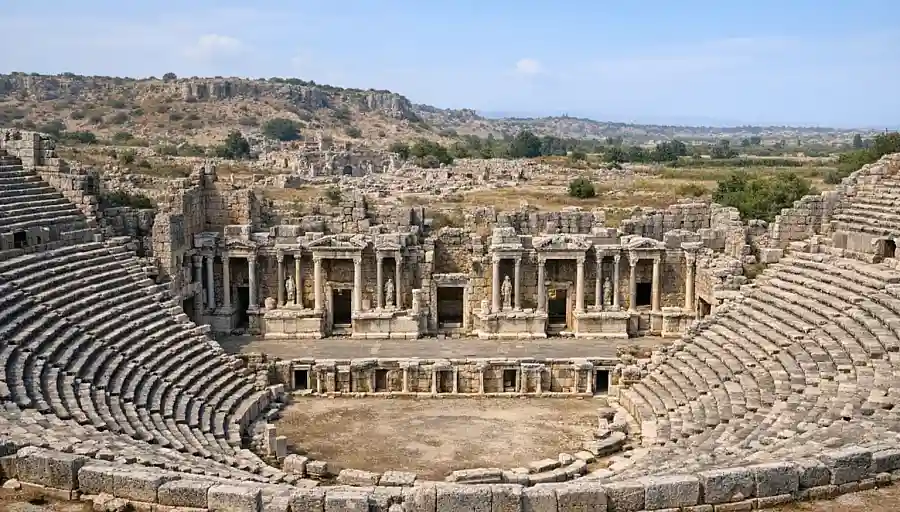
Perge’s theatre is one of the site’s biggest set-pieces. Roman theatres were engineered for crowd movement, acoustics and spectacle, and at Perge you can appreciate the scale that such entertainment demanded. As you stand here, it’s easy to imagine the city’s population gathering for performances and civic occasions.
The best way to enjoy the theatre is to take your time: view it from different angles and pay attention to how the seating area relates to the performance space.
The stadium: one of Perge’s most impressive sights
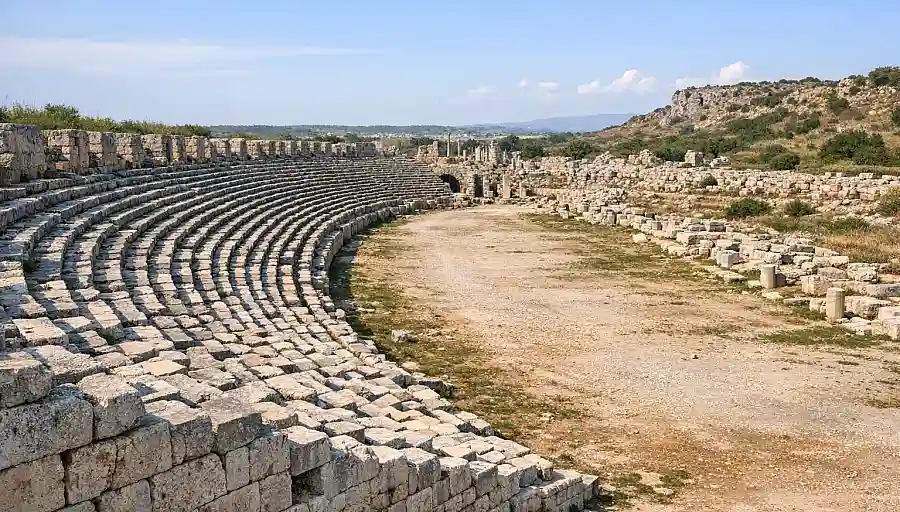
If you only have time for one “wow” structure at Perge, many travellers choose the stadium. Its elongated shape and massive seating area make it immediately readable as a sports and spectacle venue. It’s also a good reminder that Roman city life wasn’t only temples and government—it included organised public events that drew large crowds.
Other ruins worth noticing as you explore
Perge rewards slow wandering. Depending on where you spend your attention, you may notice remains of:
- Public squares and courtyards that show how space was organised for gatherings
- Walls, gates and boundary structures that hint at the city’s edges and phases of development
- Water-related features (such as channels and fountains) that underline the importance of urban water supply and display
Not every feature is equally well preserved, but the overall layout makes the visit feel varied rather than repetitive.
 AI-generated illustrative image.
How to plan your visit from Antalya
Perge is typically visited as a day trip (or part of a day trip) from Antalya. Some travellers go independently by car or taxi, while others prefer a guided excursion that also includes nearby ancient sites. If you’re staying in a resort area outside central Antalya, it’s worth thinking about transport in advance so you’re not negotiating on the spot.
Because practical details can change—such as ticket prices, opening arrangements and on-site facilities—check the latest information close to your travel date through official channels or local tourism information.
How long to allow at Perge
The site is large enough that you’ll enjoy it more if you don’t rush. A shorter visit can cover the major structures, but a more relaxed pace gives you time to understand the city plan, take photos and read the on-site information.
Best time of day and comfort tips
Perge is an open-air archaeological site with long walking stretches and limited shade in parts. In warmer months around Antalya, it can feel hot very quickly on exposed stone. Many visitors find it more comfortable earlier in the day, with water and sun protection.
- Footwear: supportive shoes are important because surfaces can be uneven and slippery in places
- Sun protection: hat, sunglasses and high-SPF sunscreen help, especially in summer
- Water: bring enough for the time you plan to stay
Guided or independent: which suits Perge better?
You can enjoy Perge independently, particularly if you like exploring at your own pace and focusing on photography. That said, Perge is also the kind of site where a good guide adds real value: the ruins are extensive, and without context it’s easy to walk past details that explain how the city functioned.
A guide can help you connect the structures—gate, street, agora, baths, theatre and stadium—into a coherent story of daily life and civic identity. If you prefer not to join a group, a private guide and driver can also be a comfortable option for travellers who want flexibility.
TurPolia can assist with arranging transport and guided visits around Antalya when you want a smooth itinerary, especially if you’re combining Perge with other archaeological stops in the region.
Common mistakes visitors make at Perge
- Underestimating the walking: the site is bigger than it looks in photos, and the most interesting parts are spread out
- Arriving unprepared for sun and heat: shade can be limited, so water and sun protection make a noticeable difference
- Rushing to the “big two” only: the stadium and theatre are impressive, but the street, gate, baths and agora are what make Perge feel like a complete city
- Assuming all details are signposted: some features are easier to understand with context from a guidebook or a professional guide
 AI-generated illustrative image.
Combining Perge with other places around Antalya
If you’d like to build a wider ancient-history day, Perge often pairs well with other major classical sites in the wider Antalya area. Another popular approach is to balance archaeology with time in Antalya itself—especially if you’re interested in museums, old-town streets, or simply a relaxed evening by the sea after a day of ruins.
When you combine sites, the key is pacing. Two locations with a drive in between can already make for a full day, particularly in warmer weather.
A respectful visit: protecting the ruins
Perge’s atmosphere depends on preservation. Stay on marked paths where possible, avoid climbing on fragile structures, and be mindful of barriers and signs. Small choices—like not stepping onto delicate stonework for a photo—help keep the site enjoyable for everyone.
Is Perge worth visiting?
Yes, if you’re interested in Roman-era city life and you want a site near Antalya that feels substantial and varied. Perge offers a rare combination: a grand ceremonial entrance, a readable city plan, and major entertainment buildings on a scale that still impresses today. With sensible planning for heat and walking, it’s one of the most rewarding ancient places to include in an Antalya holiday.
Frequently Asked Questions
Where is Perge Ancient City in relation to Antalya?
Perge is located near Antalya in the wider area around the city, making it a practical day trip from central Antalya and many nearby resorts. Exact travel times depend on where you’re staying and local traffic.
What are the must-see ruins at Perge?
Most visitors prioritise the Hellenistic Gate, the colonnaded street, the agora, the Roman baths, the theatre and the large stadium. Together they give a clear picture of how the ancient city worked.
Do I need a guide for Perge?
A guide isn’t essential, but it can make the visit much more meaningful because the site is extensive and some ruins need explanation to fully appreciate. Independent visitors often enjoy Perge most if they read up in advance or take their time with on-site information.
How much time should I plan for visiting Perge?
It depends on your pace and interest in archaeology. A quicker visit can focus on the main highlights, while a slower walk allows time for photography and understanding the city layout. If you’re combining Perge with another site, plan your day to avoid rushing.
What should I bring to Perge Ancient City?
Supportive walking shoes, sun protection and enough water are the essentials. The site is outdoors with uneven surfaces in places, and it can feel very hot in summer around Antalya.
Can Perge be combined with other ancient sites near Antalya?
Yes. Many travellers include Perge as part of a wider archaeology day in the Antalya region. The best combination depends on your interests and how much time you want to spend at each location.
TurPolia Blog
Travel stories and local tips for discovering Türkiye.


