


Polish People Living in Turkey: Social Life Tips in Alanya, Antalya and Istanbul

Turkey is a holiday favourite for many Polish travellers, and some visitors end up staying longer than planned. For some, that’s because of work, a lifestyle change, or a relationship that becomes serious. If you’re a Polish woman married to a Turkish man (or you’re a couple planning time in Turkey), your day-to-day experience will be shaped less by the headlines and more by small things: neighbourhood choice, language confidence, family dynamics, and finding “your people” in a new place.
This guide is written for international visitors who are considering a longer stay or a repeat-holiday rhythm in Turkey, with a focus on social life and practical life hacks in Alanya, Antalya and Istanbul. Everyone’s story is different, and rules and routines can change with seasons, local habits and official requirements, so think of this as grounded guidance to help you arrive prepared and settle more comfortably.
What daily life can feel like as a Polish foreigner in Turkey
Many Polish residents find Turkey welcoming, social and surprisingly community-oriented. People often chat in lifts, at the local bakery, on the bus, and in neighbourhood parks. That warmth can make settling easier, but it can also feel intense if you’re used to more personal space or quieter social norms. It’s normal to need time to adjust.
If you’re married to a Turkish man, you may find that you’re quickly connected to a wider family network. That can be a wonderful support system, especially during big life moments, but it also comes with expectations: attending gatherings, keeping in touch, and learning how family roles work in your partner’s specific household. Turkey is not one single culture; family dynamics can differ a lot depending on region, upbringing, and how traditional or modern the household is.
You’ll also notice that daily life changes dramatically by season in coastal destinations. In Alanya and Antalya, summer is busy and energetic; winter can be calmer and more local. Istanbul is more consistent year-round, but traffic, weather and neighbourhood vibe still shape your routine.
Choosing your base: Alanya, Antalya or Istanbul?
If you’re deciding where to spend a few months (or where a longer-term stay might feel easiest), it helps to be honest about what you need: language support, a walkable area, access to airports, international communities, or a quieter lifestyle.
Alanya: familiar, coastal, and easy to build routine
Alanya is known for its relaxed coastal lifestyle and its international mix, especially in areas that are popular with long-stay visitors. Many newcomers find it easier to form routines here: regular cafés, seafront walks, markets, and a generally holiday-like pace even outside peak season.
Social life in Alanya often starts with simple, repeatable places: a morning coffee spot, a women’s gym class, a neighbour’s recommended hairdresser, or a weekly market. If you’re not confident in Turkish yet, you may find more English spoken in tourism-facing places, though it varies by neighbourhood and by season.
Antalya: city comforts with a resort edge
Antalya feels more like a full city while still offering beaches, promenades and easy weekend escapes. It can suit couples who want more choice in neighbourhoods and day-to-day services, while still keeping the Mediterranean lifestyle.
Your social circle in Antalya can become pleasantly mixed: locals, long-stay foreigners, and seasonal visitors. The key is choosing activities that run year-round (rather than only summer). If you enjoy culture, cafés and seaside walks, Antalya can feel like a good balance between “living” and “holiday”.
Istanbul: exciting, international, and sometimes demanding
Istanbul can be brilliant for couples who want a truly big-city life: food, art, shopping, ferry rides, neighbourhood cafés and a constant sense of discovery. It’s also where you may find the broadest range of international communities and professional networks.
The flip side is that Istanbul can be tiring at first: traffic, crowds, hills, and the sheer scale of the city. Social life can be rich, but it often takes more planning. In Istanbul, your neighbourhood choice can make or break daily comfort, so it’s worth trying a short “test stay” before committing to a long period.
Building a social life: how foreigners actually make friends
A common mistake is waiting until you “feel settled” before you start meeting people. In Turkey, social connection is often what makes you feel settled. If you’re new, treat friendship like a routine rather than a one-off effort.
Practical ways to build a circle in Alanya, Antalya and Istanbul include joining activities that repeat weekly and attract a mix of locals and long-stay foreigners.
- Choose one regular place: a café, a gym, a pilates studio, a seaside walking route, or a neighbourhood market. Familiarity is your social shortcut.
- Say hello first: in many parts of Turkey it’s normal to greet shopkeepers, neighbours, and people you see regularly. A small greeting can become a conversation over time.
- Join interest-based groups: language exchanges, book clubs, hiking groups, cooking classes, or craft workshops tend to create more meaningful friendships than general “expat meetups”.
- Accept invitations (wisely): tea at a neighbour’s home, a family gathering, or a beach picnic can be a genuine sign of welcome. If you’re unsure, go with your partner at first.
- Keep your own identity: staying connected to Polish culture through cooking, music, traditions or celebrating holidays can help you feel grounded and more confident socially.
If you’re married into a Turkish family, it’s also healthy to have relationships that aren’t only “through” your partner. Many couples find a better balance when both people have their own friendships as well as shared social time.
Marriage, in-laws and expectations: a realistic guide
Turkish families can be wonderfully supportive, but they may also be more involved than what you’re used to. How close that involvement feels depends on the family and on boundaries you set together as a couple. The most important thing is that you and your partner talk openly about expectations before they become problems.
It helps to understand that in many families, being “polite” can look different than in Poland. People may ask personal questions early: your age, your plans, whether you will have children, or why you aren’t visiting more often. This isn’t always meant as judgement; it can simply be the style of conversation. You don’t have to answer everything, but having a calm, friendly way to redirect the topic can make life easier.
When meeting extended family, small gestures tend to matter more than perfect language. Being on time (where possible), greeting people properly, and showing appreciation for food and hospitality goes a long way.
- Bring a small gift when visiting someone’s home for the first time (something simple is fine).
- Let your partner brief you on family norms, especially around greetings, shoes in the home, and how formal the event is.
- Ask rather than assume: “Would you like me to help?” is usually appreciated, even if they say no.
- Agree boundaries privately: it’s easier when your partner handles sensitive limits with their own family.
A final note: if you ever feel isolated in your relationship because you don’t have your own language confidence or social circle, treat that as a practical problem with practical solutions. Language classes, routine outings, and your own friendships can change everything within a few months.
Language confidence: the fastest wins that help your social life
You don’t need perfect Turkish to build a good life, especially in tourist-heavy areas. But learning the basics can transform your independence and how locals respond to you. Even a few polite phrases show effort, and that effort is often rewarded with patience and warmth.
Rather than trying to learn everything, focus on “daily life Turkish” first: ordering food, asking for prices, directions, and simple greetings. If you’re in Istanbul, even basic phrases can reduce stress in taxis, markets and busy public spaces.
A helpful approach is to choose one area of life where you’ll practise Turkish every day, such as buying fruit at the market or ordering your coffee. Repetition builds confidence faster than occasional study.
Everyday life hacks for foreigners (especially in Alanya, Antalya and Istanbul)
Daily life is smoother when you plan for small friction points: paperwork, communication, transport, and how you handle money and shopping. The details vary depending on your nationality, your length of stay, and current official processes, so always double-check the latest requirements through official channels or professional advisers when needed.
Mobile, internet and staying reachable
You’ll rely on your phone more than you expect: maps, deliveries, transport, appointments, translation and banking. Visitors and residents often take different routes with SIMs and plans, and these can change over time. If you’re staying longer, it’s worth getting clear advice on what’s most suitable for your situation so you don’t lose access unexpectedly.
In the meantime, keep a simple backup plan: saved addresses offline, a written note of your accommodation details, and a second way to contact your partner or a friend.
Transport routines that reduce stress
In coastal towns, walking and short taxi rides may cover most needs, while in Istanbul you’ll likely combine walking with public transport. Traffic, roadworks and weather can change journey times significantly, especially in summer and during rain. Build in buffer time for appointments, airport transfers and family gatherings.
- Save key places in your maps app in both English and, if possible, the Turkish spelling.
- Avoid last-minute airport plans in peak season; traffic can be unpredictable.
- Choose meeting points carefully: in busy areas, agree a specific café or shop entrance rather than “outside the mall”.
Shopping and markets: how to feel at home quickly
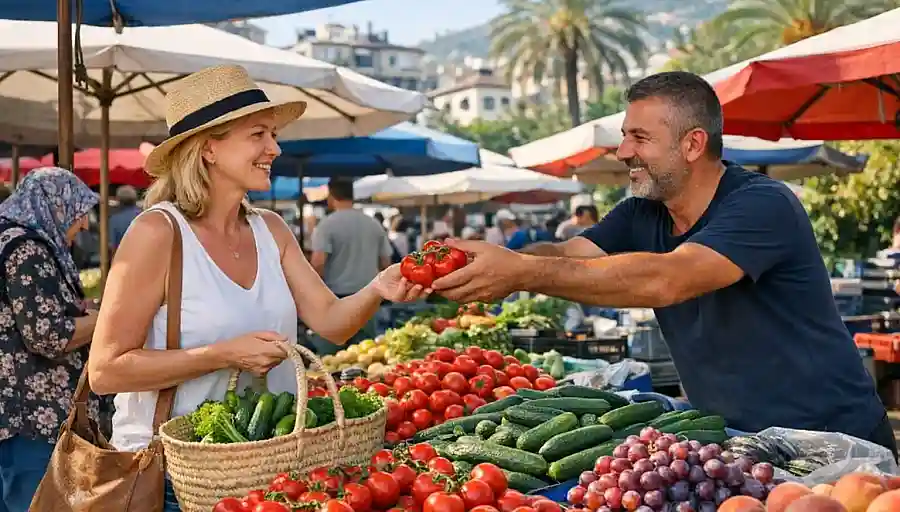
Weekly markets are one of the easiest ways to feel connected to local life. They can also be overwhelming at first: noise, crowds and fast conversations. Go early if you prefer a calmer experience, and don’t be afraid to start with just a few items until it feels familiar.
For a “settling in” shortcut, build a simple rotation of staples you already know you like. Then add one new Turkish ingredient each week. That way your kitchen feels comforting, but you’re still discovering local flavours.
Appointments, repairs and getting things done
One practical difference many foreigners notice is that some tasks are handled more through conversation than through formal systems. A friendly tone, patience, and being clear about what you need can help. If your Turkish is limited, short sentences and a translation app can work well for basics, and your partner can help for anything more complex.
If you’re arranging home repairs, deliveries or services, confirm the key points twice: the day, approximate time window, and exact address details. Timing can be flexible, especially in busy seasons.
Lifestyle, wellbeing and feeling like you belong
A good social life isn’t only about evenings out. It’s also about how you feel on an average Tuesday. In Alanya and Antalya, many people find wellbeing routines quickly: sea walks, outdoor cafés, fresh produce, and day trips when friends visit. In Istanbul, wellbeing might look more like neighbourhood rituals: a favourite bakery, a ferry commute, a regular hammam or a weekend breakfast spot.
If you’re feeling lonely, it doesn’t necessarily mean you chose the wrong place. It often means you need predictable structure. Start small:
- One regular activity each week (class, group walk, volunteering, hobby).
- One “local” routine (market day, favourite breakfast place, evening promenade).
- One connection to home (call family, cook a Polish dish, celebrate a Polish holiday).
For couples, it helps to balance “our life” with “my life”. Many international marriages work best when both partners can keep their individuality while building shared traditions.
Family travel and visits: when friends and relatives come to see you
If you end up living in Turkey for part of the year, visitors from Poland often become part of your routine. Hosting is easier when you set expectations early: how long they’ll stay, what you’ll do together, and how much rest time you need. Summer heat can be tiring for some visitors, and busy seasons can mean more crowds and longer transfer times.
A practical approach is to mix easy days (beach, café, short strolls) with one or two planned highlights. If you’re based in the Antalya region or Alanya, short day trips can be a comfortable way to show visitors the area without over-planning.
If you’d rather keep planning simple, local day tours can be a low-stress option, particularly when you have guests who don’t want to navigate transport or language on their own. TurPolia can help arrange day trips and experiences in a way that fits your pace and the season, so you can focus on enjoying time together.
What to bring (and what to buy locally) for a longer stay
Packing for a longer stay is different from a one-week holiday. You want to arrive comfortable, but not overloaded. Many everyday items are easy to buy locally, and preferences vary by person, skin type and lifestyle.
- Bring: a light layer for evenings, comfortable walking shoes, a small pharmacy kit you trust, and any specific personal-care items you’re picky about.
- Buy locally: seasonal clothing, beach items, household basics, and fresh produce.
- For social life: one outfit that feels “smart casual” for family visits and dinners, and a light scarf or cover-up that can help you feel comfortable in more conservative settings.
If you’re unsure about dress expectations, take cues from your neighbourhood and your partner’s family. In tourist areas there’s a wide range of styles, but family gatherings may be more traditional than the seafront promenade.
Seasonal reality: heat, crowds and how plans change
In Alanya and Antalya, summer brings energy and convenience (more places open, a more international vibe) but also heat and crowds. In winter, the pace can slow down; some businesses reduce hours or close, and social life may become more centred around locals and long-stay residents rather than holidaymakers.
In Istanbul, rain and wind can affect ferry services and walking comfort, and heavy traffic can influence everything from meeting friends to reaching the airport. Whatever your base, keep your plans flexible and avoid stacking too many commitments on one day.
A calm, realistic way to enjoy Turkey as a couple
Living between cultures can be deeply rewarding, but it works best when you treat it as a learning process rather than a test. Your Turkish won’t be perfect right away. You may misunderstand a family expectation. You might feel confident one week and homesick the next. That’s normal.
If you’re still at the “holiday planning” stage, consider using your next trip as a trial run for real life: stay in a residential area for part of the time, shop at a local market, try public transport, and practise a few Turkish phrases daily. A holiday can be relaxing and still teach you what day-to-day life feels like.
Whether you choose Alanya’s easy coastal rhythm, Antalya’s city-and-sea balance, or Istanbul’s big-city intensity, social life tends to improve quickly once you find routines and give yourself time to settle.
Frequently Asked Questions
Is Alanya a good place for foreigners to settle in Turkey?
Alanya can feel straightforward for many foreigners because it has an established tourism culture and a mix of long-stay residents. Your experience will still depend on your neighbourhood, the season, and how quickly you build routines such as market days, walking routes and regular cafés.
Do I need to speak Turkish to have a social life in Antalya or Istanbul?
You can start building a social life with limited Turkish, especially in tourist-facing areas, but even basic Turkish makes daily life much easier and helps you connect with locals. Many people find that learning practical phrases for markets, cafés and transport brings confidence quickly.
How can I meet other foreigners if I am married into a Turkish family?
Try joining weekly activities that match your interests, such as fitness classes, walking groups, language exchanges or hobby workshops. Having your own circle alongside family connections often improves balance and helps you feel more independent.
What should I wear when meeting my Turkish in-laws for the first time?
Smart casual is usually a safe choice. In many families, modesty is appreciated more than fashion, but expectations vary widely. If you’re unsure, ask your partner what the family typically wears at home gatherings and choose something comfortable and respectful.
Are rules for long stays and residence permits in Turkey the same every year?
No. Requirements and processes can change, and they can also differ depending on nationality and personal circumstances. If you are planning a longer stay, check the latest official guidance and consider professional advice for anything complex.
Tales Beyond Borders


