


Practical Travel Tips for Türkiye: Money, Taxis, Mosques and More

A first trip to Türkiye is exciting, but it can also come with a few everyday questions: should you pay by card or carry cash, which currency is most useful, how do taxis work, and what should you wear in mosques? This guide keeps things simple and practical, so you can feel confident from the moment you arrive.
Because travel conditions can vary by city, season and even neighbourhood, treat the advice below as a sensible baseline. If you are travelling with a tour operator for airport transfers, day trips or a multi-day itinerary, it is still useful to understand the basics for your free time.
Card or cash in Türkiye?
In most tourist areas of Türkiye, you can use bank cards widely, especially for hotels, restaurants, supermarkets and larger shops. Contactless payments are common in many places. That said, cash still makes life easier for small purchases and situations where card payments may not be available.
As a general approach, many travellers find it easiest to do both: use a card for bigger expenses and keep a modest amount of cash for smaller, everyday spending.
- Use cards for: hotels, most restaurants, chain stores, larger museums or attractions, and shopping centres (where card terminals are standard).
- Use cash for: street food, smaller cafés, local markets, some taxis, tips, public toilets, and small neighbourhood shops.
- Carry small notes: small change can be useful, especially when buying low-cost items or paying drivers.
Card acceptance can vary by location. In very small towns or more local areas, cash is more important than in major tourist cities. It is also worth remembering that payment systems can occasionally be affected by short network outages, so having some cash as back-up is sensible.
Should you bring euros or Turkish lira?
The official currency in Türkiye is the Turkish lira (TRY), and it is the most practical option for day-to-day spending. In some tourist-heavy areas, you may see prices shown in euros and some businesses may accept euros. However, paying in a foreign currency can mean an unfavourable exchange rate or awkward change, so it is usually simpler to pay in lira for most things.
Many international visitors prefer to arrive with a small amount of cash (in lira or a widely accepted currency such as euros) and then withdraw lira from an ATM or exchange money after arrival, depending on what is most convenient for their route. Exchange rates and fees vary by provider, so it is worth checking what your own bank charges for international withdrawals and card payments.
- Most useful day-to-day: Turkish lira.
- Handy as a back-up: a small amount of euros (or your home currency) can be helpful, but plan to spend mainly in lira.
- Keep receipts: if you exchange money, holding on to your exchange receipt can be helpful if you need to change leftover cash later.
If you are unsure, a simple solution is to use your card for larger payments and withdraw lira in smaller amounts as you go, rather than carrying a lot of cash at once.
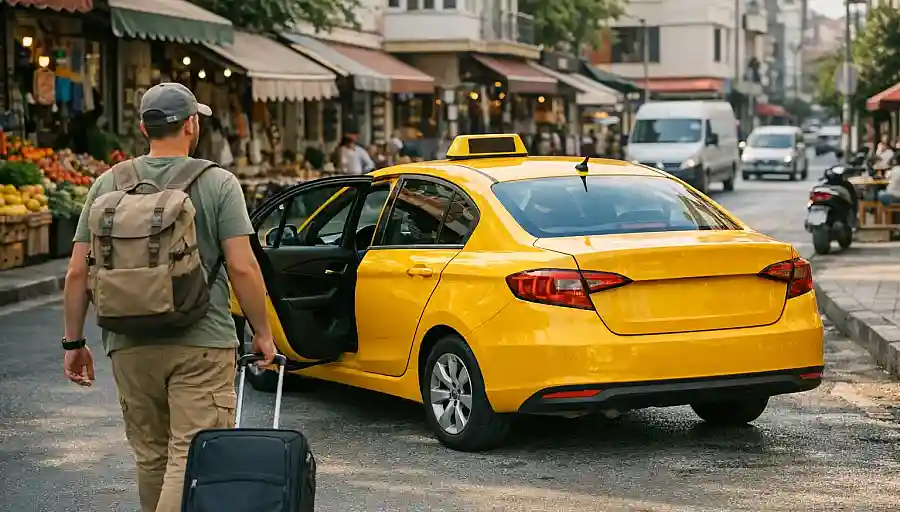
Taxis in Türkiye: what to watch for
Taxis are a normal part of getting around in Turkish cities, but it is wise to use common-sense checks, particularly in busy tourist areas. Standards and habits can vary between cities, and traffic can be intense at peak times.
- Choose official taxis: use clearly marked licensed taxis and avoid unmarked vehicles offering rides.
- Meter expectations: in many places, rides are normally charged by the meter. If a driver suggests a fixed price, clarify the total cost before you get in so there is no misunderstanding.
- Have your destination ready: showing the address on your phone (or a pinned map location) helps, especially if you do not speak Turkish.
- Keep small notes: paying with a very large note can sometimes lead to “no change” situations. Small denominations make things smoother.
- Check your route calmly: it is reasonable to follow the general route on your map app, but remember that local traffic diversions are common.
For airport transfers or longer journeys, many travellers prefer a pre-arranged transfer for clarity and comfort, especially after a flight. If you are joining a guided tour, transfers are often organised as part of the plan, which reduces the need to negotiate transport on the spot.
Visiting mosques: simple dress rules and etiquette
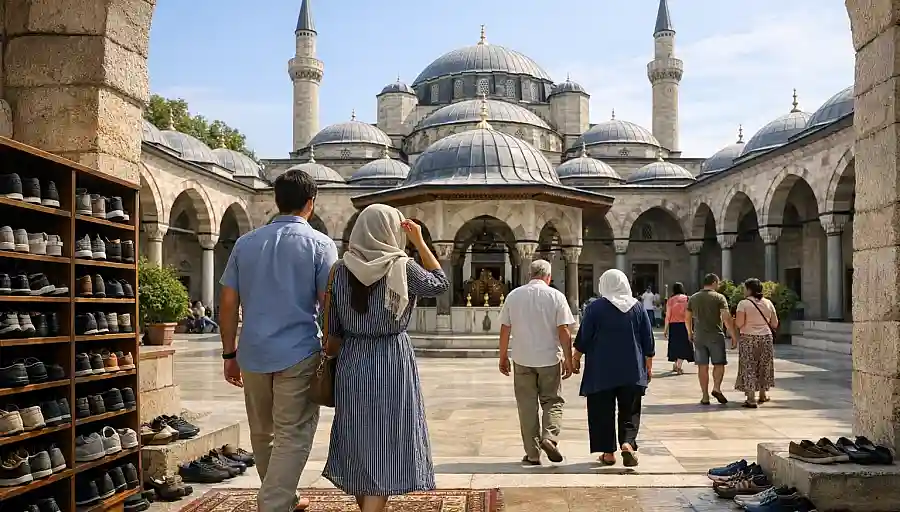
Mosques are living places of worship, and visitors are welcome outside of prayer times in many locations. You do not need specialist clothing, but modest dress is expected for everyone.
- General guideline: cover shoulders and knees.
- Women’s head covering: in many mosques, women are expected to cover their hair with a scarf. Some popular mosques provide loan scarves, but it is easier to carry your own light scarf.
- Shoes: you will normally remove your shoes before entering the prayer area (you may be given a bag or asked to place them in a shoe rack).
- Behaviour: keep voices low, avoid walking in front of people who are praying, and ask before taking photos of individuals.
Prayer times change through the year. If you arrive during a prayer, you may be asked to wait until it finishes or to remain in designated visitor areas. If you want a relaxed visit, aim for a quieter time of day and dress in a way that will not leave you scrambling for cover-ups at the entrance.
Summer heat: avoiding sunstroke and dehydration
Türkiye can be very hot in summer, especially along the Mediterranean and Aegean coasts and in large cities. Heat affects people differently, and it can feel stronger than expected if you are walking between sights.
- Drink regularly: do not wait until you feel thirsty. If you are sightseeing, take small, frequent sips of water.
- Use shade strategically: plan indoor breaks (museums, cafés) during the hottest part of the day when possible.
- Wear a hat and light layers: breathable fabrics and a sunhat help more than you might expect.
- Sun cream matters: reapply, especially if you are swimming or sweating.
- Go easy on the first day: if you have just arrived, give your body time to adapt before a full day of walking.
If someone feels dizzy, confused, unusually tired, or stops sweating in extreme heat, treat it seriously. Get them into shade, offer water if they can drink, and consider seeking medical help. Summer conditions can change quickly with humidity and wind, so daily planning helps.
Can you drink tap water in Türkiye?
Tap water in Türkiye is treated in many areas, but travellers’ experiences vary by region and building infrastructure. In some places it may be safe but have a strong taste or smell due to minerals or chlorination. Many visitors prefer bottled water for drinking, particularly for short stays.
A practical approach is to use bottled water for drinking and consider tap water acceptable for brushing teeth if you are not particularly sensitive, while still using your judgement based on the area and your accommodation. If you have a sensitive stomach or you are travelling with young children, choosing bottled water more consistently can help reduce risk.
Is bargaining normal?
Bargaining is part of the shopping culture in some places, but not everywhere. Understanding where it is expected (and where it is not) makes the experience more comfortable for both you and the seller.
- Where bargaining is common: bazaars, market stalls, souvenir shops, some carpet/leather/textile stores, and shops selling high-margin gift items.
- Where prices are usually fixed: supermarkets, pharmacies, most cafés and restaurants, shopping malls, and many modern boutiques.
If you do bargain, keep it friendly and light. A smile and a polite tone go a long way. It can help to decide your maximum price before you start, and be prepared to walk away if it does not feel right. If you are offered tea and conversation, enjoy the hospitality, but do not feel pressured to buy something you do not want.
Internet, Wi‑Fi and eSIM options
Most hotels and many cafés provide Wi‑Fi, but quality can vary depending on the building, the number of users and the area. If reliable internet matters to you (navigation, messaging, work), consider organising mobile data.
Travellers generally have three common options:
- Roaming with your home provider: convenient, but it can be expensive depending on your plan.
- A local SIM card: often a good choice for longer stays, but you will typically need your passport for registration and set-up can take time in busy shops.
- An eSIM: useful if your phone supports it and you want to arrange data without visiting a shop. Coverage depends on the network used by the eSIM provider.
If you plan to use ride services, maps and translation tools heavily, it is worth having mobile data from day one. For shorter trips focused on guided activities, hotel Wi‑Fi may be enough, but having data as a back-up helps with day-to-day flexibility.
Tipping culture in Türkiye
Tipping in Türkiye is common, but it is not always strictly required. It is usually seen as a polite thank you for good service, and amounts tend to be flexible rather than fixed.
- Restaurants and cafés: some people round up the bill or leave a small tip if they are happy with the service. In some venues, a service charge may already be included, so it is sensible to check the bill.
- Taxis: some passengers round up to a convenient amount, especially for short rides.
- Hotels: tipping for helpful service (such as luggage assistance) is common, depending on the situation.
- Guides and drivers: tips are often given if you enjoyed the experience, particularly on full-day tours.
If you are unsure, you will not be alone. A simple rule is to tip when you genuinely feel you have received good service, and to keep small notes available so you can do it easily.
Emergency numbers in Türkiye
For urgent emergencies in Türkiye, 112 is the main emergency number and can be used to reach services such as ambulance, police and fire. If you ever feel unsafe, unwell, or witness an accident, call 112.
A few practical tips make emergencies less stressful:
- Save 112 in your phone (even though it is easy to remember).
- Know your location: a pinned location on your map app helps you explain where you are.
- Carry key details: keep your hotel name and address written down in case your phone battery runs low.
If you have a medical condition, it can help to carry essential information in English (and, if possible, a short Turkish note) about allergies or medications.
A calm, confident approach to everyday travel
Türkiye is generally easy to navigate once you understand a few local habits: carry some lira, use your card where it makes sense, treat taxi rides with the same practical caution you would in any busy destination, and dress modestly for mosque visits. Add sensible sun protection in summer, organise mobile data if you need it, and keep 112 in mind for emergencies.
If you are planning excursions, guided sightseeing or a multi-stop itinerary, a local operator can help smooth out the practical details so you can focus on enjoying the food, culture and landscapes. However you travel, these basics will help you feel prepared and relaxed throughout your holiday.
Frequently Asked Questions
Will my bank card work in Türkiye, and should I tell my bank before I travel?
Most international Visa and Mastercard cards work in Türkiye, but acceptance can vary by business and location. It is a good idea to check your bank’s travel rules, ensure your contact details are up to date, and understand any foreign transaction fees before you leave.
Is it better to withdraw cash from an ATM or exchange money in cash?
Both options are used by travellers. ATMs can be convenient, while cash exchange can be useful if you prefer to arrive with euros or another currency. Costs vary depending on your bank, the ATM provider and exchange rates, so checking fees and withdrawing smaller amounts can be a practical approach.
Do I need to cover my hair to enter every mosque in Türkiye?
In many mosques, women are expected to cover their hair, while men and women should dress modestly with shoulders and knees covered. Some mosques provide loan scarves, but bringing your own light scarf makes visits easier.
Can I use an eSIM in Türkiye without visiting a mobile shop?
If your phone supports eSIM, you can usually set up an eSIM remotely and start using data without going to a shop. Coverage and performance depend on the network used by the eSIM provider, so it is worth checking what is included before you buy.
What should I do if I need urgent help in Türkiye and I do not speak Turkish?
Call 112 for emergencies. Try to stay calm, share your location clearly (a pinned map location helps), and use simple English. If you can, ask a nearby staff member (for example at a hotel, shop or café) to help explain the situation.
Tales Beyond Borders


