


Side Ancient City: A Story of Seafarers, Markets and Empires

Approach Side along the coast of Türkiye’s Mediterranean and it is easy to understand why people settled here. The land forms a small, defensible peninsula, the sea lies on both sides, and the horizon feels open to opportunity. Today, visitors come for beaches, sunsets and the theatre and temples rising from the modern resort town. Yet Side’s ancient story has sharper edges too: a port that prospered, a city that changed hands, and a place that witnessed the darker currents of the ancient economy alongside its splendour.
What follows is Side’s history told in a traveller-friendly way: not a textbook, but a walk through time you can keep in mind as you wander the stones. Details from the ancient world can be complex and sometimes debated, and not every chapter is visible on the ground today. Still, Side rewards curiosity. The ruins feel more vivid when you imagine the people who built, bargained, prayed, performed and struggled here.
Setting the Scene: Why Side Became a City
Side sits on a peninsula along the Pamphylian coast, in the region around modern Antalya. In the ancient world, coastal geography mattered. A workable anchorage meant ships could shelter, resupply and trade. A narrow land approach meant easier defence. And fertile plains nearby helped feed a growing population.
Picture the earliest seafarers scanning the shoreline for a safe place to land. A headland with calm water on one side, a view for spotting incoming sails, and access to inland routes would have made Side appealing. Over time, temporary landings can become permanent structures: storage spaces, workshops, then walls and public buildings. A town begins with practical needs, and later learns to dream in stone.
A Port with Many Voices: Foundations and Early Identity
Side’s beginnings are wrapped in the typical mixture of local tradition, outside influence and later storytelling. Ancient cities often explained their origins with legends of founders arriving by sea, bringing new language, customs and gods. Whether you take those tales literally or as symbolic, they point to something travellers can feel even now: Side was a meeting point.
Ports attract people who speak differently, dress differently and want different things. Merchants come for profit, sailors come for provisions, and officials come to control what moves through the gates. If you stand near the harbour area today and imagine a shoreline lined with masts, you can almost hear the layered noise of arrival: bargaining, orders shouted, cargo shifted, oars clattering, animals restless in pens.
How Side “Built Itself”: From Harbour Town to Planned City
Cities are not built in a single moment. They accumulate: one wall line replaces another; a simple street becomes a paved colonnade; a shrine becomes a temple with a grand façade. Side’s growth followed the logic of a successful coastal settlement: protect the peninsula, organise movement, secure water, then invest in public life.
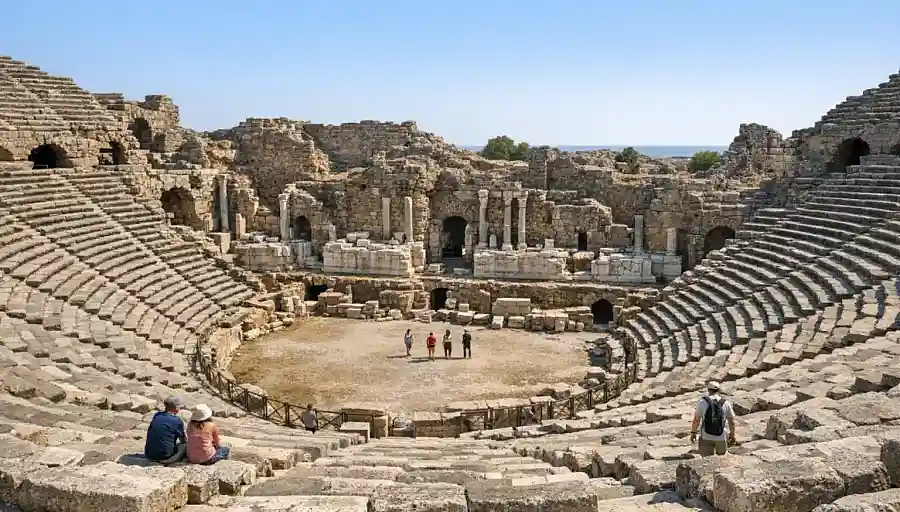
As you explore, look for signs of that gradual planning. The monumental gate and the broad main streets speak of a city that expected visitors and wanted to impress them. A large theatre hints at wealth and population: performances were not only entertainment but a display of status and civic pride. Bath complexes, fountains and monumental architecture suggest an urban culture that valued comfort, hygiene, and the social ritual of public spaces.
It helps to imagine how the city worked on an ordinary morning. Shopfronts would open along the main routes. Craftspeople would shape metal, wood and stone. Officials would handle disputes and taxes. And in the background, always, the port: the reason the city could pay for its grandeur.
Trade, Prosperity, and the Uncomfortable Truth of the Ancient Economy
Side’s location made it commercially powerful, and ancient coastal commerce could be astonishingly diverse: agricultural goods from nearby plains, olive oil and wine from wider networks, timber and metals from inland, and luxury items moving across the Mediterranean world. A thriving port tends to become a place where goods are weighed, taxed and redistributed.
But the ancient economy also included human beings treated as property. Across the Mediterranean in antiquity, slavery was a grim reality, woven into households, agriculture, mining, shipping and construction. Side, as a significant port, is historically associated in some accounts with slave trading during parts of its past. The precise scale, periods and mechanisms are not always straightforward to pin down from what a visitor sees today, and the city’s long history spans many different rulers and economic phases. What is clear is that Side participated in the wider ancient world, and the wider ancient world included practices we now recognise as brutal and unjust.
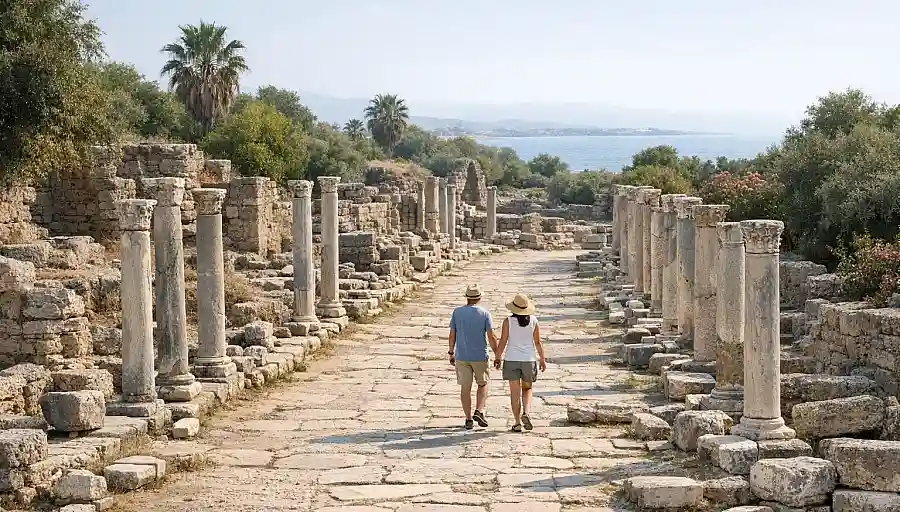
When you walk through the theatre or along the colonnaded streets, it is worth holding two ideas at once. First: the artistry and organisation required to build such a city. Second: the human cost that often sat behind ancient wealth. This does not diminish Side’s importance; it deepens it, making the visit more honest and memorable.
Empires at the Door: Why Side Changed Over Time
Side’s story is also a story of shifting power. Coastal cities rarely live in isolation. They are pulled into alliances, rivalries and conquests because whoever controls the ports can influence trade and taxation. Over centuries, Side lived through changing administrations and cultural layers, particularly during the Roman period when many Anatolian cities flourished with theatres, baths and grand streets.
Think of it as a series of renovations to the same house. New rulers may keep what works, replace what signals old loyalties, and add buildings that project their authority. A city like Side could be both local and international at once: local in its daily rhythms and traditions, international in its connections, currency and visitors.
Reading the Ruins Today: What to Look For on a Visit
Side is one of those places where the ancient and modern sit close together. You can move from modern cafés and beach promenades into monumental archaeology within minutes. For many travellers, that is part of the charm: you do not need specialist knowledge to feel the atmosphere.
As you walk, try using the city like an ancient resident might have. Enter as if you have arrived for business: through the main gateway area, towards the principal streets. Notice how the ruins guide movement and how broad spaces open into more intimate ones. Pause at the theatre and imagine it full: not silent stones, but a loud crowd reacting to performance, politics and celebrity.
Near the shoreline, the iconic temple remains are often the most photographed features, especially at sunset. Rather than rushing for a quick picture, take a moment to think about why temples were placed where they were: visible, symbolic, and tied to the identity of the city. In ports, temples also spoke to travellers—an announcement of protection, belonging, and civic pride.
Practical Planning: Making Your Side Visit Smooth
Side can be visited in different ways: as a short stop on a wider regional day, or as a slower wander if you are staying nearby on the coast. What you will enjoy most depends on your pace and the season. In high summer, the heat can make midday exploration tiring, and shaded breaks become important. In cooler months, the ruins can feel calmer and more contemplative, though weather may change quickly.
Wear comfortable walking shoes, as surfaces can be uneven and stone underfoot can be slippery after rain. A hat and sun protection are sensible for much of the year, and carrying water is wise, especially in warmer periods. If you enjoy photography, early morning and late afternoon often bring softer light and a more relaxed mood.
If you are joining a guided visit, a good guide can add real value by helping you connect the remains to the story: how a theatre functioned, why the main streets were laid out as they were, and what daily life might have felt like. In peak periods, tours and transport schedules can vary with demand, so it is worth planning ahead if you have limited time.
Who Side Is Suitable For
Side appeals to a wide range of travellers because you can tailor the experience. It works well if you are curious about history but do not want a full-day museum-style itinerary, because the main highlights are relatively straightforward to reach. It also suits travellers who enjoy combining culture with sea air and an easy holiday atmosphere.
- History lovers who want a big-name ancient site that still feels accessible
- Families looking for a scenic walk with plenty of stops and open spaces
- Couples who enjoy sunset views and a dramatic coastal setting
- Photographers chasing warm light on stone and sea
If you are travelling with someone who has limited mobility, Side may still be enjoyable, but expect uneven ground in parts of the archaeological area. Routes and access can change with conservation work, so it is sensible to stay flexible and choose a pace that suits your group.
What to Bring for a Comfortable Explore
- Comfortable shoes with grip for stone paving and uneven surfaces
- Sun protection (hat, sunglasses, sunscreen), particularly from spring to autumn
- Water to stay comfortable during longer walks
- A light layer outside peak summer, as coastal breezes can feel cool
- A curious mindset: Side is at its best when you slow down and imagine the city alive
A Story to Take Home
Side is not only a backdrop for holiday photos. It is a place where the Mediterranean world once flowed in and out with the tides—carrying goods, ideas, faith, entertainment, and also the harsh realities of ancient labour and human exploitation. Seeing Side clearly means appreciating both its beauty and its complexity.
When you leave, you may remember the big stones and the sea view. But you may also remember something quieter: the sense of standing at a crossroads of history, where prosperity and struggle sat side by side, and where a small peninsula became a city known far beyond its shore.
Frequently Asked Questions
How long should I allow to visit Side Ancient City?
It depends on your pace and interest. Some travellers are happy with a short walk to see the main highlights, while others prefer a slower visit with time for photos and breaks. In hot weather, allowing extra time for rests can make the experience far more enjoyable.
Is Side Ancient City suitable for families with children?
Yes, many families enjoy Side because it feels open and scenic rather than confined. Children often like the scale of the theatre and the sense of exploring. Bringing water, sun protection and planning a relaxed route helps, especially in warmer months.
What should I wear when exploring the ruins?
Choose comfortable walking shoes with decent grip and lightweight clothing suitable for the season. A hat and sunscreen are useful for much of the year, and a light layer can be handy if the breeze picks up near the sea.
Is it true that Side was involved in slave trading?
Side is historically associated in some accounts with slave trading during parts of antiquity, reflecting the wider realities of the ancient Mediterranean economy. The details can be complex and not every aspect is visible in the ruins today, but it is fair to say the city’s prosperity was linked to the broader trading world of its time, which included slavery.
Do I need a guide to appreciate Side?
You can enjoy Side independently because the setting is dramatic and the main structures are easy to recognise. A knowledgeable guide can add useful context, helping you understand how the city functioned and how different periods shaped what you see now. Availability can vary by season, so planning ahead is helpful if a guided visit is important to you.
Tales Beyond Borders


