


Traditional Turkish Desserts to Try on Holiday in Türkiye

If you’re travelling in Türkiye and want to taste the country’s sweet side, start with a handful of classics you’ll see again and again: baklava, künefe, lokum (Turkish delight) and a small family of milk-based puddings. The good news is you don’t need a specialist food tour to find them—most towns have at least one good pastane (patisserie) or tatlıcı (dessert shop). What matters is knowing what you’re ordering, which desserts are usually served hot, and which ones make sense after a big Turkish meal.
How to enjoy Turkish desserts without over-ordering
Portions in Türkiye can be richer than many visitors expect, especially when desserts are soaked in syrup or made with butter and nuts. A simple approach is to share a couple of items between two people and order tea (çay) alongside—it cuts the sweetness and turns dessert into a relaxed break rather than a food challenge.
You’ll also notice that desserts appear in different settings:
- Pastane (patisserie): best for milk puddings, cakes, and everyday sweets.
- Specialist dessert shops (tatlıcı): a good bet for baklava varieties, şerbetli (syrupy) pastries, and freshly made items.
- Restaurants: handy for finishing a meal with one classic option—often baklava, sütlaç or sometimes künefe.
Prices vary widely by city, ingredients (especially nuts and butter), and whether you’re buying by the piece or by weight. Rather than relying on a single “average”, it’s more useful to compare like-for-like: pistachio-heavy baklava will usually cost more than simpler syrup pastries, and tourist centres may be priced differently from neighbourhood shops.
10 traditional Turkish desserts worth seeking out
Baklava (layered pastry with nuts)
Baklava is the headline act for many visitors: thin layers of pastry with nuts and syrup, cut into neat shapes and served at room temperature. You’ll see versions with pistachio, walnut, or mixed nuts, and differences in texture depending on the shop’s style.
Regional note: Baklava is widely associated with Gaziantep (often called Antep), and you’ll see “Antep-style” used as a quality signal in many cities.
How it’s served: usually not hot; often paired with tea or Turkish coffee. Some places offer it with kaymak (clotted cream) or alongside dondurma (Turkish ice cream).
Künefe (hot cheese dessert)
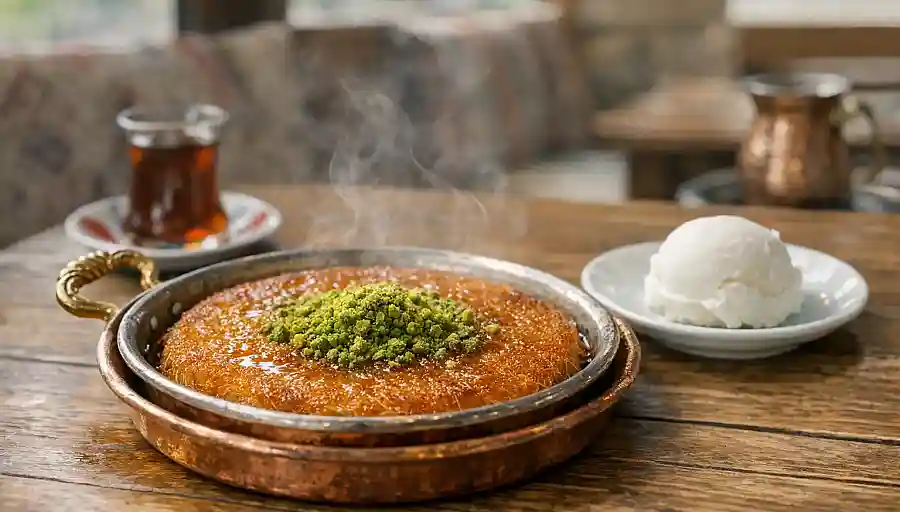
Künefe is a must if you want something served fresh and hot. It’s typically made with shredded pastry and a stretchy, mild cheese in the middle, finished with syrup and often sprinkled with nuts. Because it’s cooked to order in many places, it’s one of the desserts where timing matters most.
How it’s served: almost always hot. Many shops offer dondurma on the side, which turns it into a hot-and-cold combination.
Ordering tip: it’s rich; sharing is sensible, especially after dinner.
Lokum (Turkish delight)
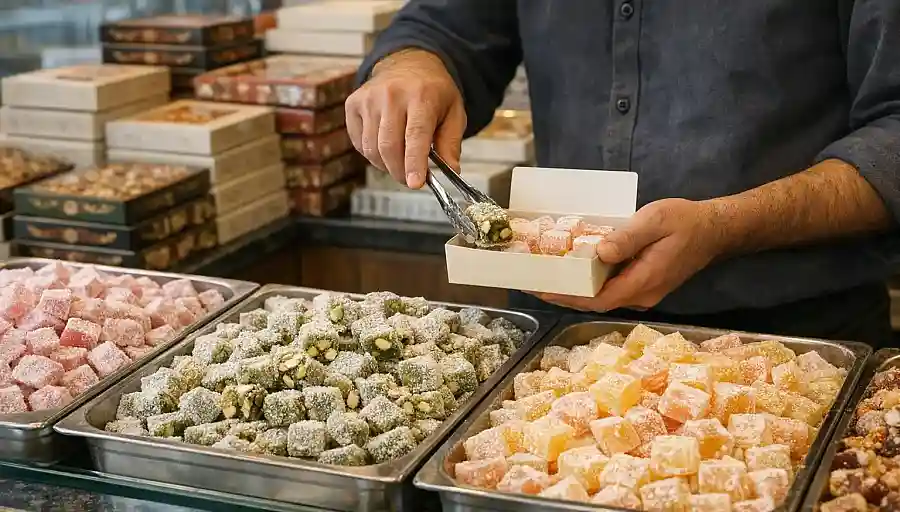
Lokum is the easiest dessert to sample casually and one of the most practical to take home as a gift. Expect soft, chewy cubes dusted with icing sugar or coconut, with flavours ranging from rose and citrus to nut-filled versions.
Where it shines: specialist sweet shops where you can ask to taste a couple of varieties before choosing a box.
Common misunderstanding: not all lokum is the same. Fresher lokum tends to be softer and more fragrant, while lower-quality versions can feel overly sugary or rubbery.
Sütlaç (Turkish rice pudding)
Sütlaç is a gentler dessert—creamy, milky and not usually as sweet as syrup pastries. You’ll find it in many restaurants and patisseries, sometimes served plain and sometimes with a browned top.
How it’s served: commonly chilled, though serving style can vary from place to place.
Good moment to order: when you want something comforting after a spicy or grilled main course.
Kazandibi (caramelised milk pudding)
Kazandibi is closely related to milk puddings, but with a distinctive caramelised layer that gives a light bitterness and toasted flavour. It’s typically sliced and served so you can see the browned underside.
How it’s served: usually cool or at room temperature, making it a good option on a warm day when you don’t want a heavy syrup dessert.
Şekerpare (small syrup-soaked biscuits)
Şekerpare are small, tender biscuits made to drink in syrup. They often have a glossy finish and may be topped with a nut. If you like soft textures and a strong sweet hit, this is the one to try.
How it’s served: commonly at room temperature, though you may occasionally find it slightly warm in busy shops where trays turn over quickly.
Revani (semolina cake with syrup)
Revani is a syrup-soaked cake made with semolina, typically lighter than it looks and easy to eat even when you’re full. It’s a classic with a simple flavour profile, which is why it pairs well with tea.
How it’s served: usually at room temperature. Some places offer it with cream or ice cream, especially in tourist areas.
Tavuk göğsü (milk pudding with a twist)
Tavuk göğsü is one of the more surprising traditional desserts: a smooth, elastic milk pudding that, in its traditional form, is made using finely shredded chicken breast. Done well, it doesn’t taste “meaty”, but the name can still catch visitors off guard.
How it’s served: typically cool, often with cinnamon sprinkled on top.
Diet note: if you avoid meat for any reason, ask before ordering—some modern versions may be made without chicken, but you shouldn’t assume.
Tulumba (fried pastry in syrup)
Tulumba is a street-friendly sweet: small ridged pieces of fried dough soaked in syrup, crisp on the outside and juicy inside. It’s intensely sweet, so a couple of pieces is often enough.
How it’s served: usually at room temperature. In some places it’s sold by weight; elsewhere you can buy a few pieces at a time.
Aşure (Noah’s pudding)
Aşure is a distinctive dessert made by combining grains and other ingredients into a thick pudding, often finished with toppings such as nuts. The flavour is gently sweet and quite different from syrup-heavy pastries.
When you’ll see it: availability can be seasonal or shop-dependent, so it’s worth ordering when you notice it on a menu.
What’s usually served hot, and what often comes with ice cream
If you want something freshly made and warm, künefe is the most reliable choice. For ice cream pairings, you’ll most often see dondurma offered alongside hot desserts (to create contrast) or with syrup cakes in more tourist-facing menus. Baklava is also sometimes served with a creamy side like kaymak.
Because serving styles vary by region and by venue, it’s perfectly normal to ask, “Sıcak mı?” (Is it hot?) or “Dondurma ile olur mu?” (Can it be with ice cream?). Staff are used to these questions.
Vegetarian and gluten-free considerations (what to ask)
Many traditional Turkish desserts are vegetarian, but not all—and several contain ingredients that matter for allergies or intolerances. The safest approach is to ask directly at the counter, especially in busy tourist areas where recipes can vary.
- Vegetarian: milk puddings (such as sütlaç and kazandibi) are typically vegetarian, while tavuk göğsü may not be. Syrup pastries often contain butter and may include eggs.
- Gluten: many favourites (baklava, künefe, revani, tulumba, şekerpare) are commonly made with wheat-based ingredients. Some shops may offer gluten-free alternatives, but they are not universal.
- Nuts: pistachio and walnut are common, and cross-contact can happen in display counters.
If you have a serious allergy, keep your request simple and clear, and consider choosing a venue that can explain ingredients confidently.
Where to try desserts during a holiday (practical, no-stress choices)
In most destinations, the easiest strategy is to locate one good-looking pastane or dessert shop near where you’re staying and sample gradually over a few days. Look for places with steady local footfall, clear labelling, and trays that appear to be turning over rather than sitting untouched.
If you’re visiting Alanya, a guided walk through the old town can be a relaxed way to spot traditional sweet shops and learn the food vocabulary that makes ordering easier. TurPolia’s Alanya walking tour is one option to consider if you’d like to combine sightseeing with local flavours at street level.
Small mistakes visitors make with Turkish sweets
- Ordering one dessert each after a large meal: sharing is often the better experience, especially with syrup pastries.
- Assuming “pistachio” always means the same thing: quality and quantity vary; if pistachio is the reason you’re buying, look closely at the filling.
- Mixing up shop freshness: desserts like künefe are at their best when made to order; baklava and syrup pastries are usually fine from the tray, but they should still look glossy and well kept.
- Buying gifts without thinking about travel: boxed lokum is generally easier to carry than syrup pastries, which can be delicate and sticky in warm weather.
A simple tasting plan for one week in Türkiye
If you want a straightforward way to cover the classics without overdoing it, try this rhythm: one syrup pastry day (baklava or revani), one milk pudding day (sütlaç or kazandibi), and one “hot dessert” evening (künefe). Add lokum as your take-home sweet, and you’ll leave feeling you’ve genuinely sampled Turkish dessert culture rather than just eating sugar on repeat.
Frequently Asked Questions
Which Turkish dessert is most associated with Gaziantep (Antep)?
Baklava is the dessert most widely associated with Gaziantep (often called Antep), and many shops elsewhere highlight “Antep-style” baklava to signal a pistachio-forward style.
Are Turkish desserts vegetarian?
Many are, but not all. Milk puddings are often vegetarian, while tavuk göğsü may contain chicken in the traditional recipe. If it matters to you, ask the shop to confirm ingredients.
Is it easy to find gluten-free Turkish desserts?
Classic favourites are commonly made with wheat-based ingredients, so gluten-free options are not guaranteed. Some specialist places may offer alternatives, but it’s best to ask directly and be cautious about cross-contact.
Can I take Turkish delight (lokum) home in my luggage?
Lokum is usually easy to pack and is often sold in sturdy boxes. If you are travelling internationally, remember that import rules can vary by destination, so check what is allowed before you fly.
What should I order if I don’t like very sweet desserts?
Try a milk-based pudding such as sütlaç or kazandibi, or ask what is least sweet at the counter. Pairing dessert with plain tea also helps balance the sweetness.
TurPolia Blog
Travel stories and local tips for discovering Turkey.


