


What Can You Take Out of Turkey? Customs Rules for Tourists

If you’re flying home from Türkiye with a suitcase full of gifts, the key question is usually: will this be allowed out of Turkey and into my home country? In most cases, everyday souvenirs and packaged foods are straightforward, but a few categories (such as antiques, high-value items, large quantities of food, and cash or precious metals) can trigger rules, checks or paperwork. This guide explains what tourists commonly take out of Türkiye, what can cause problems, and how to pack sensibly—while clearly separating Turkish export rules, airport security screening, airline baggage policies, and the import rules of your destination country.
Four different rulebooks travellers mix up
Before looking at specific items, it helps to separate the checks you may face:
- Turkish export regulations (leaving Türkiye): what Türkiye allows you to take out, and what may require a permit or be prohibited.
- Airport security screening: what can pass through security in hand luggage (for example, liquids, gels and sharp objects).
- Airline baggage policies: your airline’s rules on weight, size, fragile items and certain restricted goods.
- Import rules at your destination: what your home country allows you to bring in, and what must be declared (often strict for food, animal products and high-value goods).
A common mistake is assuming that “it was fine to buy” means “it’s fine to export” and “fine to import”. These are separate questions, and the strictest rules are often at your destination, not in Türkiye.
Everyday souvenirs and foods: what’s usually straightforward
Most tourists leave Türkiye with locally made sweets, coffee, spices, small ceramics, textiles and glass souvenirs. These everyday items are generally not sensitive from an export perspective, especially when they are clearly personal purchases in normal quantities. The main complications tend to come from airport security restrictions (liquids in hand luggage) and destination-country food rules (what you’re allowed to bring in).
Turkish Delight (Lokum)
Turkish delight is one of the easiest gifts to pack. Choose factory-sealed boxes or well-wrapped products from reputable shops, and keep them protected from heat and crushing in your suitcase. If your destination country has strict rules on food imports, sealed commercial packaging and a clear ingredients label can make any inspection simpler.
Turkish coffee
Ground Turkish coffee and whole roasted beans are popular to take home and are typically uncomplicated as personal goods. For smoother airport screening, keep coffee in its original packaging. Some airports may pay extra attention to fine powders in hand luggage, so placing coffee in checked baggage can reduce delays—provided it’s packed to avoid spills.
Turkish spices
Spices are usually fine to take out of Türkiye as personal items, but they can raise questions at your destination because many countries treat plant products cautiously. Buy from trusted sellers, keep spices labelled where possible, and avoid loose, unlabelled bags if you know your destination is strict about food imports.
Evil eye souvenirs (Nazar Boncuğu)
Nazar boncuğu charms are typically a simple souvenir to export. The main issue is practical: they are often glass and can break easily. Wrap them well and keep very fragile pieces in hand luggage if your airline allows it.
Food and drink gifts that need smarter packing (and extra checks)
A few popular Turkish products are more likely to create complications—not necessarily because Türkiye restricts them, but because they are liquids, animal products, or items that your destination country may regulate more closely.
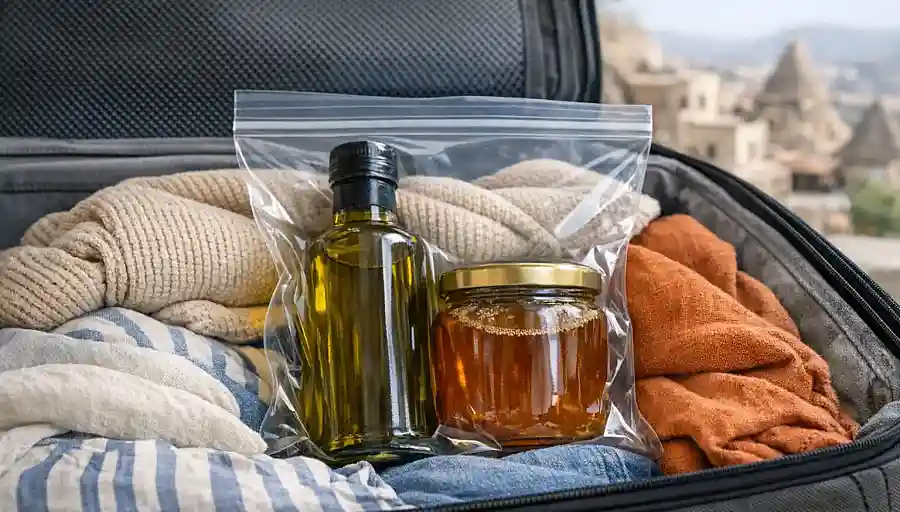
Olive oil
Olive oil is a liquid, so the biggest hurdle is usually airport security if you try to carry it through in hand luggage. For most travellers, checked baggage is more practical. To reduce leaks and damage:
- Prefer sealed, commercially bottled olive oil with a tight cap.
- Use a secondary barrier (a sealed plastic bag) and cushion it with clothes.
- Avoid filling unlabelled bottles yourself; it can look suspicious during screening.
Also consider airline baggage handling: glass bottles are fragile, and damage is always possible in the hold.
Turkish honey
Honey is both a food product and a liquid-like substance for security purposes. Many travellers pack it in checked baggage in a sealed jar with secondary containment to prevent sticky leaks. Import rules for honey vary widely by country, so check what your destination allows and whether it must be declared.
Cosmetics bought in Türkiye
Cosmetics are usually fine as personal purchases, but the practical issues are:
- Liquids, gels and creams in hand luggage: airport security rules may limit what you can carry through in your cabin bag.
- Alcohol-based products and aerosols: may face extra restrictions depending on airline policy and packaging.
- Quantity: very large amounts can look commercial and may attract questions at customs (either in Türkiye or on arrival).
If you are carrying skincare or perfume as gifts, keeping items in their original packaging and carrying receipts can help if you are asked about value or quantity.
Gold, jewellery and high-value items
Gold and jewellery are common purchases in Türkiye, but they deserve extra care because they can involve declarations, proof of purchase and valuation—especially when you arrive home.
Practical steps that reduce stress:
- Keep invoices/receipts and any certificates or documentation provided by the seller.
- Pack securely and consider carrying valuable jewellery in hand luggage rather than checked baggage.
- Expect questions about value at your destination. Many countries have thresholds for duty/tax and reporting, and those thresholds vary.
If you’re travelling with jewellery that you owned before your trip, having photos or other proof can be useful if you’re concerned about being asked to show when and where it was purchased.
Cash and money when leaving Türkiye
Cash rules can be time-sensitive and can differ depending on your nationality, your destination, and the route you’re flying. There may be declaration requirements for carrying large amounts of cash (or cash equivalents) when leaving a country and/or entering another one. These requirements are not the same as airline rules, and they are not the same everywhere.
To avoid problems:
- Check the latest guidance from official Turkish authorities and your destination-country customs before travel.
- Keep cash and high-value items secure and split sensibly between travellers if you’re travelling as a group (without trying to evade any declaration rules).
- Keep paperwork that shows legitimate source of funds where relevant (for example, bank withdrawal slips), particularly if carrying a large sum.
Do not rely on social media posts for cash limits; these rules can change and are often misunderstood.
Items that may require permits or can cause serious trouble
The biggest risks are items that fall under cultural heritage protection, wildlife/animal products, or controlled goods. Even if something is sold in a market, it may not be legal to export.
Antiques, archaeological items and “old-looking” objects
Türkiye is strict about protecting cultural heritage. Objects that could be classed as antiques or archaeological artefacts can be restricted from export and may require official permission. The difficulty for travellers is that “antique” can be interpreted broadly, and some items are made to look old.
If you are considering anything that appears genuinely old (or could be perceived as such), treat it cautiously. Buying from a reputable dealer and obtaining proper documentation is essential, and in many cases the safest choice is simply not to purchase it for export.
Wildlife, animal products and certain traditional items
Some products made from animals (or containing animal parts) can be restricted by export rules, import rules, or international protections. The same applies to certain plants and natural materials. If you’re unsure what an item is made from, ask the seller and avoid anything that seems questionable or poorly documented.
Medicines and supplements
Medication rules are complex because they involve Turkish controls, airline safety rules, and the import laws of your destination. If you plan to travel with prescription medicine or large quantities of any pharmacy items, keep them in original packaging and carry supporting paperwork where appropriate. If in doubt, verify requirements with official sources before you fly.
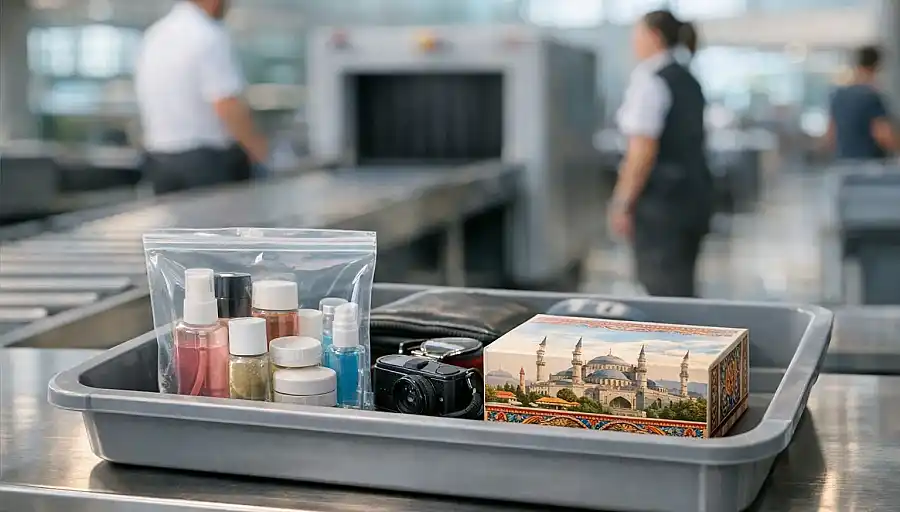
What happens at the airport: security screening vs customs checks
At the airport you may pass through checks that feel similar but have different purposes:
- Security screening focuses on safety. Liquids, gels, aerosols, sharp objects and some powders may be restricted or inspected, especially in hand luggage.
- Customs controls focus on what you are taking out (and what you will later bring into another country). Customs may be interested in high-value purchases, large quantities, or restricted categories such as cultural items.
A common traveller mistake is packing a gift (olive oil, honey, perfume) in hand luggage and only realising at security that it may not be allowed through. When in doubt, pack liquids in checked baggage and keep breakables well protected.
Practical packing advice that prevents most problems
- Keep items in original packaging where possible, especially food, cosmetics and coffee.
- Carry receipts for valuable purchases, particularly jewellery and high-end goods.
- Pack liquids to prevent leaks: sealed bag + padding; keep away from electronics.
- Separate fragile items and cushion them. Consider hand luggage for small, breakable souvenirs.
- Avoid “commercial-looking” quantities of the same product unless you are confident you can justify it as personal gifts and comply with destination rules.
- Plan for screening: if you pack powders (spices, coffee) in cabin baggage, make them easy to inspect.
Common mistakes travellers make before flying home
- Assuming Turkish export rules and destination import rules are identical. Your home country may ban or restrict foods that are readily available in Türkiye.
- Confusing customs with airline limits. Even if something is legal to export, your airline may have restrictions on carriage or packaging.
- Trying to carry liquids through security. Olive oil, honey, creams and perfume are frequent causes of last-minute stress.
- Buying “antique-style” items without documentation. If an item could be interpreted as cultural heritage, it can create serious complications.
- Relying on outdated advice. Cash declarations and restricted categories can change; check the latest official guidance before you travel.
Practical summary for leaving Türkiye with souvenirs
Most tourists can take home everyday gifts like lokum, Turkish coffee, spices, nazar boncuğu souvenirs and cosmetics without difficulty, as long as they pack sensibly and respect airport security rules. Extra care is needed for liquids (olive oil, honey, perfume), high-value items (gold and jewellery), large amounts of cash, and anything that could be considered an antique or cultural artefact. Because rules can change and differ by destination, check the latest information from official Turkish authorities, your airline, your departure airport, and your destination-country customs before you fly.
Frequently Asked Questions
Can I take Turkish Delight (lokum) out of Türkiye in my luggage?
In most cases, tourists take lokum home without problems, especially when it is packaged and clearly for personal use. The main restrictions are usually set by your destination country’s food import rules, which can vary, so it’s sensible to check before you travel.
Should I pack olive oil and honey in checked baggage or hand luggage?
They are likely to be treated as liquids at airport security, so checked baggage is often easier. If you do pack them, use sealed containers, add a second leak-proof bag, and cushion well to reduce the chance of breakage or spills.
Can I take gold or jewellery bought in Türkiye back home?
Often yes, but jewellery can trigger declaration or tax rules when you arrive in your destination country. Keep receipts and any documentation from the seller, and check your home country’s customs rules for reporting and allowances.
Are there restrictions on taking cash out of Türkiye?
There can be declaration requirements for carrying larger amounts of cash (or cash equivalents), and the rules can change. Check the latest guidance from official Turkish authorities and your destination-country customs before you fly.
What souvenirs should I avoid buying because they might be restricted from export?
Avoid anything that could be considered an archaeological artefact or genuine antique without proper official documentation, and be cautious with items made from animal products or protected natural materials. If you are unsure what something is, it’s safer not to purchase it for export.
Tales Beyond Borders


