


What to Eat in Turkey: A First-Time Visitor’s Guide
 AI-generated illustrative image.
For a first-time visitor, deciding what to eat in Turkey is one of the most enjoyable parts of planning a trip. The short answer: start with the big classics (kebabs, döner, pide, lahmacun and meze), make time for a proper Turkish breakfast, and leave space for baklava, lokum (Turkish delight), Turkish coffee and tea. Food varies by region too, so what you try in Istanbul may feel quite different from the flavours you’ll come across in Antalya on the Mediterranean coast or in Cappadocia.
This guide focuses on the dishes travellers actually look for, what they are, and how to order with confidence when you’re reading a menu for the first time.
How Turkish meals usually work
Turkish dining is often built around sharing and variety. In many restaurants, a table might begin with a few cold starters (often meze) and bread, followed by a main dish from the grill or oven. Portions can be generous, especially when several dishes are ordered for the table, so it’s normal to start with a couple of items and add more if you’re still hungry.
A few useful things to know before you sit down:
- Bread is a big part of the meal and is commonly used to scoop meze and sauces.
- Meals can be paced. If you want dishes to arrive together, it’s fine to ask; if you prefer a slower meal, that’s normal too.
- Grilled food is widespread, but you’ll also find excellent vegetable dishes, soups and pastries.
The essential savoury dishes to try
Kebabs (not just one dish)
“Kebab” in Turkey is a broad category, not a single recipe. It generally means seasoned meat cooked over charcoal or a flame, but the style changes from place to place. On menus you’ll often see:
- Şiş kebab: cubes of meat grilled on skewers (often lamb or chicken).
- Adana-style and Urfa-style kebabs: minced-meat skewers, with heat levels that vary by restaurant.
- İskender-style: sliced meat served with bread and sauce, often with yoghurt on the side.
If you’re unsure, ask whether something is acılı (spicy) or acısız (not spicy). Heat levels can be subtle in one place and punchy in another.
Döner: the everyday favourite
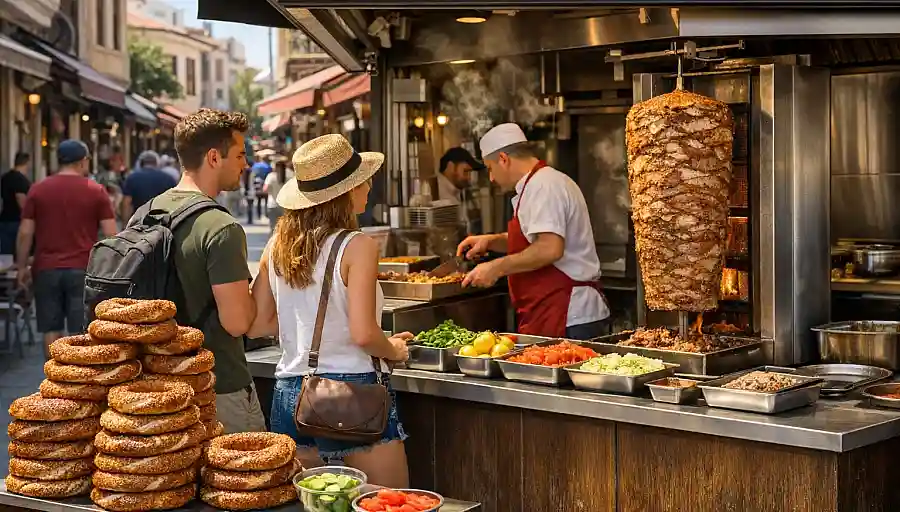
Döner is the familiar rotating-stack meat, sliced to order. In Turkey it might come in bread, as a wrap, or plated with rice, chips, salad and sauces on the side. It’s quick, filling and easy to find in busy areas of Istanbul and tourist centres along the coast.
A simple ordering tip: if you want chicken, look for tavuk döner; for meat (often beef or a mix), you may see et döner.
Pide and lahmacun: Turkish-style oven breads
Pide is often described as Turkish “pizza”, but it’s better to think of it as an oval flatbread baked with toppings. Common versions include minced meat, cheese, or a mix. It’s a great choice if you want something satisfying that isn’t from the grill.
Lahmacun is a thinner, crisp flatbread topped with spiced minced meat. It’s often served with salad and lemon so you can roll it up. Travellers sometimes order it expecting a heavy pizza-style dish; it’s usually lighter and easy to eat, which makes it popular as street food.
Köfte: Turkish meatballs with endless variations
Köfte are seasoned meat patties or meatballs, typically grilled and served with salad, rice or chips. The flavour profile can shift depending on the region and the restaurant’s style, but it’s a reliable choice if you want something familiar without being bland.
Mantı: small dumplings, big comfort
Mantı are small dumplings, usually served with yoghurt and a buttery sauce (often with a little pepper or dried herb). It’s one of those dishes people remember because it feels homemade even in a restaurant setting. If you enjoy pasta or dumplings, it’s an easy ‘yes’ for a first trip.
Gözleme: the classic griddle snack
Gözleme is a thin, hand-rolled flatbread cooked on a griddle and filled with ingredients such as cheese, potato, spinach or minced meat. You’ll often see it in casual cafés, small shops and some roadside stops. It’s especially handy on travel days when you want a warm bite that isn’t heavy.
Meze: the flavours that make a meal feel Turkish
Meze are small dishes served before (or alongside) the main course. They’re ideal for first-time visitors because they let you try several flavours in one sitting. A meze spread might include creamy yoghurt-based dips, herby salads, aubergine dishes, and spicy tomato-and-pepper mixes.
If you want a straightforward approach, order two or three meze for the table and add a grilled dish afterwards. If you’re eating by the sea in Antalya or elsewhere on the Mediterranean coast, meze often pair naturally with seafood.
 AI-generated illustrative image.
Street food to look for in Istanbul and beyond
Street food in Turkey is often about fast, fresh and filling. In busy areas of Istanbul you’ll see snacks that locals grab between errands, and in tourist towns you’ll find similar staples near promenades and markets. A few popular options include:
- Simit: a sesame-crusted bread ring, great with tea.
- Börek: flaky pastry filled with cheese, potato or minced meat.
- Balık ekmek: a fish sandwich you’ll often spot in waterfront areas.
- Midye dolma: stuffed mussels sold by some vendors; if you’re curious, choose places that look busy and well organised.
- Dondurma: stretchy Turkish ice cream, sometimes sold by showman-style vendors in touristy areas.
A practical rule of thumb: street food is usually most appealing when it’s being cooked or handled continuously and the stall has a steady flow of customers.
What a typical Turkish breakfast looks like
Turkish breakfast (kahvaltı) is less about a single dish and more about a table of small plates. If your hotel in Cappadocia offers breakfast, or you’re staying in Antalya where mornings are often slow and sunny, it’s worth setting aside time to enjoy it properly rather than grabbing something on the go.
A classic breakfast table commonly includes:
- Cheeses and olives with tomatoes and cucumber
- Fresh bread with butter, honey and jam
- Eggs in various forms (you may see menemen, a soft egg dish with tomato and pepper)
- Sucuk (spiced sausage) in some places
- Tea, served hot in small tulip-shaped glasses
If you’re ordering breakfast in a café, it’s common to see set breakfasts designed for sharing. If you prefer to choose individually, you can usually order eggs plus a few sides and still get the feel of the meal.
Baklava, lokum and other sweet endings
Dessert in Turkey is a serious subject, and it’s easy to over-order after a big meal. If you’re trying just a couple of sweets on your first trip, start with the classics:
- Baklava: layered pastry with nuts and syrup; richness varies by style and filling.
- Turkish delight (lokum): soft, chewy cubes in many flavours, often with nuts.
You’ll also come across milk-based puddings and syrupy pastries, plus regional desserts that appear more in certain areas. If you have allergies, especially to nuts, it’s worth checking carefully before you order because nuts are common in many sweet dishes.
Turkish tea and Turkish coffee: what to expect
Turkish tea is the everyday drink, served hot and strong in small glasses. It’s offered in cafés, shops and sometimes even during shopping as a gesture of hospitality. If you don’t want sugar, you can simply drink it plain.
Turkish coffee is different from filter coffee. It’s brewed very finely and served unfiltered, so it’s normal to leave the last sip (where the grounds settle) in the cup. On menus you may be asked about sweetness; if you’re unsure, asking for it medium-sweet is a common starting point, or you can request it without sugar.
 AI-generated illustrative image.
Regional specialities worth seeking out
Turkey’s food culture is regional, and that’s part of the fun. You don’t need a checklist, but it helps to know what to look out for as you move around the country.
Istanbul is the place to sample a bit of everything: grills, meze, seafood near the water, and an endless range of bakeries and sweet shops. It’s also one of the easiest cities for trying different styles in a short time because menus are so varied.
On the Mediterranean coast, including Antalya, meals often lean naturally towards fresh salads, meze and seafood alongside the familiar kebabs and pide. If you enjoy fish, look for simply grilled options and a few cold starters to share.
Cappadocia is known among travellers for hearty, warming dishes that suit the landscape and cooler evenings outside the peak of summer. You may see regional oven-cooked specialities alongside staples like mantı and gözleme.
Further afield, you’ll hear travellers talk about the southeast for its spice and kebab culture, and the Aegean for vegetable dishes and olive-oil cooking. Even if your itinerary stays with the major highlights, these regional influences show up on menus across the country.
Useful tips for ordering food in Turkey
A few small phrases and habits make ordering much easier, especially in busy restaurants or when you’re using a menu with limited English.
- Check the main ingredient: tavuk (chicken), et (meat), balık (fish), peynir (cheese), sebze (vegetable).
- Control the spice: ask for acılı (spicy) or acısız (not spicy).
- Choose how you want it served: many items can come as a plate, in bread, or as a wrap—if you have a preference, say so.
- Go for variety: if you can’t decide, ordering a couple of meze plus one main dish is an easy, very Turkish way to eat.
- Takeaway is common: if you want food to go, ask for paket.
- Polite basics help: lütfen (please) and teşekkürler (thank you) are always appreciated.
If you have dietary restrictions or allergies, it’s wise to be explicit rather than assuming a dish is meat-free or nut-free. Some items that look vegetarian can be cooked with meat, and many desserts contain nuts.
Common misunderstandings first-time visitors run into
- Assuming “kebab” means one thing: it’s a whole family of dishes, so two kebabs can taste completely different.
- Ordering too much too soon: meze, bread and a main can add up quickly—especially at lunch.
- Expecting Turkish coffee to be like espresso: it’s thicker, slower to drink, and meant to be sipped.
- Forgetting to ask about spice: heat levels vary by region and by chef.
A simple way to plan your ‘must-eat’ list
If this is your first trip, aim to try a few essentials rather than chasing everything at once: one grilled kebab, one döner, one oven-baked option (pide or lahmacun), a meze spread, mantı or gözleme, a proper Turkish breakfast, and at least one sweet (baklava or lokum) with tea or coffee. Do that in Istanbul, Antalya, or Cappadocia and you’ll come home with a real taste of Türkiye—without turning every meal into a challenge.
And if you’re building an itinerary around food as well as sights, TurPolia can help arrange private days with a local guide, so you can combine neighbourhood exploration with the right places to try regional dishes.
Frequently Asked Questions
Is Turkish food very spicy?
It depends on the dish and the region. Many meals are not spicy at all, but some kebab styles and sauces can have a noticeable heat. If you prefer mild food, ask for “acısız” (not spicy).
What’s the difference between döner and kebab in Turkey?
Döner is meat cooked on a rotating vertical spit and sliced thinly. “Kebab” is a broader category that usually refers to grilled or roasted meat dishes in many different styles, including skewers and minced-meat kebabs.
What are some good vegetarian foods to try in Turkey?
Many meze and vegetable dishes are suitable, as well as cheese or spinach gözleme, some types of pide, salads, and certain soups. It’s still worth asking, as recipes can vary and some dishes may be cooked with meat or meat stock.
How do I order Turkish coffee if I don’t want sugar?
Ask for it “sade”, which means without sugar. You may also see options for medium-sweet or sweet; if you’re unsure, you can ask what the café recommends.
Any quick tips for choosing street food in Turkey?
Look for stalls that are busy and turning food over quickly, and choose items that are being cooked fresh or handled in a clean, organised way. If you have a sensitive stomach, start with simpler options like simit or börek before trying richer or more adventurous snacks.
TurPolia Blog
Travel stories and local tips for discovering Türkiye.


