


Xanthos Ancient City: The Forgotten Capital of Lycia
 AI-generated illustrative image.
Xanthos is the ancient city most travellers mean when they ask where to see the “capital of Lycia” in Türkiye. Set slightly inland from the Turquoise Coast, it’s a powerful place: part hillside necropolis, part civic centre, and part open-air lesson in how the Lycian world blended with Greek and Roman influence. If you want a site that feels historically significant without being over-polished, Xanthos is an excellent choice.
Why Xanthos is worth a detour on the Turquoise Coast
Many ancient sites in the region are visited for their dramatic scenery or a single famous monument. Xanthos is different. The impact comes from how much of the city’s story is still readable in the landscape: tombs placed high on the slopes, civic buildings lower down, and scattered carved stonework that hints at the city’s importance over many centuries.
It’s also a rewarding stop if you enjoy quieter archaeological visits. You can take your time, walk at your own pace, and focus on details such as masonry, inscriptions, and the way different periods sit on top of each other.
Xanthos and the Lycians: what “capital” really means here
Lycia was not a single city-state. It was a region with its own language, identity, and a network of settlements. When Xanthos is described as a “capital”, it reflects its leading role in the Lycian world and its long-standing prominence compared with many surrounding sites.
For visitors, that status matters because Xanthos is not just a collection of ruins. It’s a place where you can see how a local Anatolian culture expressed itself through distinctive tomb architecture, and how later periods reshaped the city with more familiar Greco-Roman building styles.
 AI-generated illustrative image.
UNESCO World Heritage status: why the site is internationally significant
Xanthos is associated with UNESCO World Heritage recognition in the region, reflecting both its archaeological value and what it reveals about Lycian civilisation and its connections across the Mediterranean. In practical terms, this is a clue to what you should pay attention to on site: not only the bigger structures, but also the carved stones, tomb types, and inscriptions that make Xanthos distinct from many other ancient cities.
It’s also a reminder to approach the ruins with care. Many of the most important elements are not grand standing buildings; they are vulnerable surfaces and fragments that can be damaged by climbing, rubbing, or moving loose stones.
What to look for at Xanthos: the highlights on a first visit
Xanthos can feel scattered at first, especially if you arrive expecting an obvious “main street” or a single headline monument. A better approach is to explore it as a sequence of zones: hillside tombs above, public buildings below, and viewpoints that help you understand why the city developed where it did.
The hillside necropolis and Lycian tomb styles
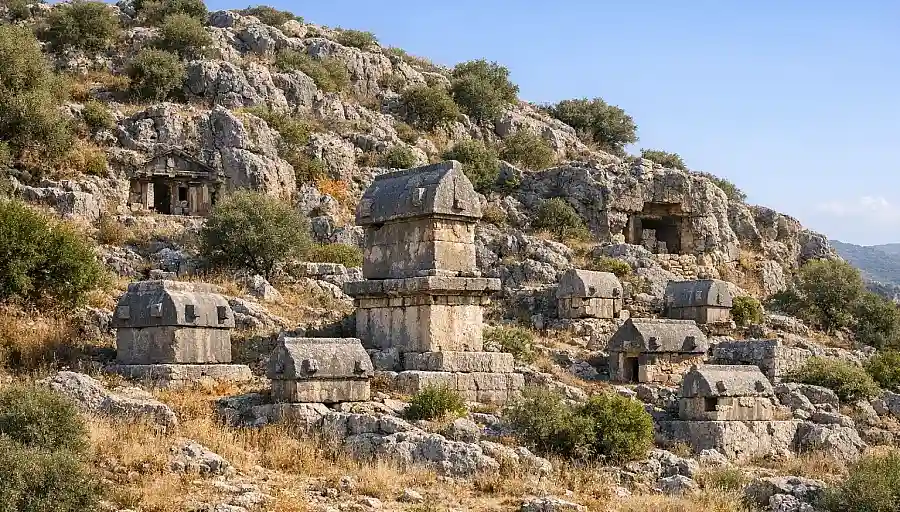
One of the most memorable parts of Xanthos is the tomb landscape. Look out for elevated tombs and sarcophagi forms that reflect local Lycian traditions rather than purely Roman practice. Even if you don’t know the terminology, you’ll notice that many burials were designed to be seen from a distance, turning the surrounding slopes into a statement of status and identity.
As you walk, pause to take in the relationship between the tombs and the city below. That visual connection is a big part of what makes Xanthos feel like a “capital” rather than a minor settlement.
The theatre and the civic centre below
In the lower areas, you’ll typically find the more recognisable public-city elements: seating, building foundations, and the general footprint of an urban centre that evolved through different eras. This is a good area to slow down and look closely at stonework, because you can often spot changes in style and construction that hint at different building phases.
If you enjoy photography, the contrast between worked stone, open ground, and the surrounding countryside often makes for strong, simple compositions.
The acropolis area and viewpoints
Xanthos is not only about individual ruins; it’s about setting. Higher ground can help you read the city’s defensive logic and its position in the wider landscape. If you’re visiting in warmer months, this is also the section where timing matters most, because exposed viewpoints can be hot and bright.
Carvings and inscriptions: the details many visitors rush past
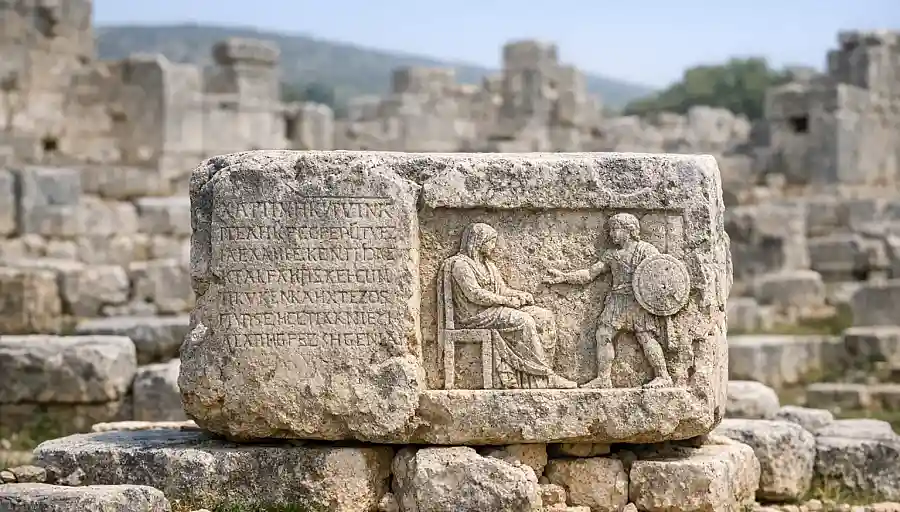
Even without specialist knowledge, inscriptions and carved fragments are among the most direct links to real lives and real decisions made here. Give yourself permission to spend time with the smaller pieces: letterforms, relief edges, and the way stones have been reused. These details are part of why Xanthos is treated as a key site for understanding Lycia.
Practical tips for visiting Xanthos
Xanthos is an outdoor archaeological site with uneven ground and limited shade in many areas. Planning for comfort makes a big difference to how much you enjoy it.
- Footwear: Wear shoes with decent grip. Many surfaces are rocky, dusty, or irregular.
- Sun and heat: Bring water, sunscreen, and a hat, especially outside the cooler parts of the day.
- Pacing: Don’t try to “tick off” every stone. Pick a route that includes both the tomb slopes and the civic area for a fuller picture.
- On-site reading: If there are information panels, they’re worth your time. Xanthos makes more sense with a little context.
- Respecting the ruins: Avoid climbing on tombs or carved blocks. Fragile edges can break, and surfaces can wear quickly.
If you’re travelling by car and building your own day, it’s sensible to combine Xanthos with other nearby Lycian-era stops so you don’t spend more time in transit than on the ground. If you prefer a pre-planned route with a clear historical thread, a multi-site itinerary can be easier and more rewarding.
 AI-generated illustrative image.
Seeing Xanthos as part of a bigger Lycian story
Xanthos becomes even more meaningful when it’s not your only Lycian site. You start recognising repeated features (especially tomb types and city layouts), and you also notice how varied the region is from one valley to the next.
If you like the idea of following Lycia across the coast and its inland valleys, TurPolia’s Lycia ancient cities round trip along the Turquoise Coast is a practical way to connect major sites into one coherent journey without having to plan every stop yourself.
Common misunderstandings that can spoil a first visit
- Expecting one “must-see” building: Xanthos is more about the whole landscape of ruins than a single intact monument.
- Rushing the tomb areas: Many visitors spend all their time in the lower civic zone and miss what makes Xanthos uniquely Lycian.
- Visiting unprepared for sun exposure: The site can feel far more strenuous in the heat than you expect from photos.
- Treating carved stones as seating: Even when blocks look sturdy, they may be historically important and easily damaged.
A quieter UNESCO-listed site that rewards curiosity
Xanthos suits travellers who enjoy archaeology in its real setting: open air, imperfect, and layered with different eras. Come expecting a thoughtful walk rather than a “showpiece” attraction, and you’ll leave with a much clearer sense of why Lycia mattered, and why this forgotten capital still holds such weight on Türkiye’s Turquoise Coast.
Frequently Asked Questions
Where is Xanthos Ancient City in Türkiye?
Xanthos is in the Lycian region on Türkiye’s south-western Turquoise Coast area, slightly inland from the resort towns along the coast. It’s often visited as part of a wider route through the ancient cities of Lycia.
Is Xanthos a UNESCO World Heritage Site?
Xanthos is associated with UNESCO World Heritage recognition in the region, which reflects its importance for understanding Lycian civilisation and the site’s archaeological value. If UNESCO status matters for your plans, check the latest listing details before you travel.
What are the main things to see at Xanthos?
Most visitors focus on the hillside tomb areas (including distinctive Lycian burial styles), the remains of public buildings such as the theatre zone, and carved stonework and inscriptions that show the city’s long history.
How long do you need at Xanthos?
It depends on your interest and the heat, but it’s wise to allow enough time to explore both the tomb slopes and the lower civic areas without rushing. If you like reading on-site information and taking photos, you’ll want longer.
What should I bring when visiting Xanthos?
Comfortable shoes with grip, sun protection, and water are the essentials. The ground can be uneven, and shade can be limited in parts of the site.
TurPolia Blog
Travel stories and local tips for discovering Türkiye.


